Archive for October, 2009

Joy is…dogs in costume.

30 October 2009

halloween-dogs

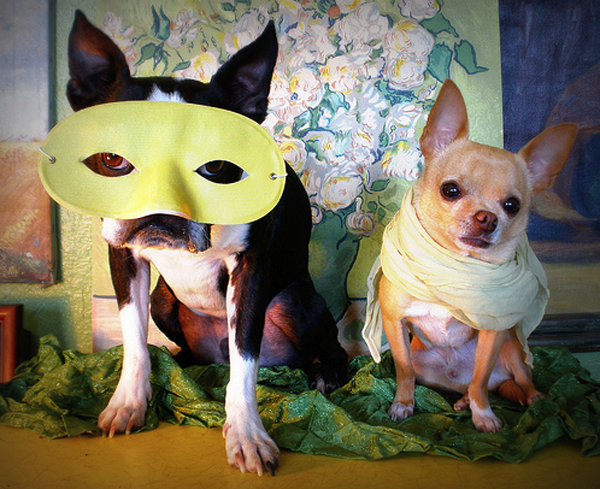
Aside from babies, there really is nothing cuter in a costume than a dog. Cat lovers might dispute this, but cats are so reluctant, and their claws so sharp, and they always look so put upon. Dogs are lovably malleable and unaccountably cheerful in the face of whatever ridiculous ensemble we might devise for them.

No need to elaborate on the link between cuteness and joy (I’ve written about it here). Just head over to Flickrblog to see more costumed pooches grinning and bearing it.

Happy Halloween, and have a joyful weekend!

Xx Ingrid

costume-dog

dogbanana

Languages of happiness

29 October 2009

chalkboard

Whoa whoa whoa!

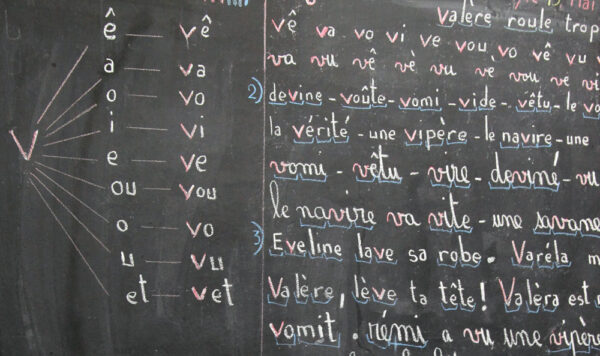
That was my friend Peter’s reaction to evolutionary biologist Olivia Judson’s NYT blog post this week, which discussed the connection between making certain sounds (such as “eeee”) and positive emotion, via what’s called the facial feedback hypothesis. Judson explains the link and then goes on to wonder: Do certain languages with “smiling sounds” make their speakers feel happier than others? Are some languages, by a curious accident of circumstances, languages of happiness?

Peter’s reaction was mine as well, because we had just had this exact conversation a few weeks ago. I was expressing my frustration in being unable to find a linguist who could illuminate the connection between language and the facial feedback hypothesis. I had done this post on words that make you joyful early on in the blog’s history, and drawing on Eric Weiner’s “Mol-do-va” (dour) vs. “Ja-mai-ca” (euphoric) comparison I was sure there had to be research on the subject. Peter then told me he had formulated this hypothesis 35 years ago, and had long believed in the power of onomatopoeic words like “glee” to boost your mood.

According to Judson, no research has really been done to confirm or refute these suppositions. But, going on what we do know we can deduce a premise that intuitively feels plausible. If induced smiles have been shown to impact mood (as they have in several studies, most notably this one), and certain sounds induce smiles, then it seems likely that these sounds could influence mood, and by extension, so could the languages that make frequent use of them.

If, through research, we discover this is true, then it adds in an exciting way to the pool of sounds that can be considered intrinsic aesthetics of joy. We already accept the emotional content of musical sounds — that a bright, brassy note from a trumpet is joyous while a drawn-out note on a cello is baleful and contemplative. And certain voices affect us similarly — the high pitch of a child’s voice triggering a different emotional response than the husky bass of an old man. With linguistic sounds, the question is slightly different because it is not about the sound itself, but the motions required to produce the sound — the accident of nature that conflated smiling and speaking functions into the same muscles.

This leads to another interesting question: do you have to actually make the “eeee” sound, or is just hearing it or seeing it pronounced enough? For true facial feedback, you’d actually need to perform the gesture. But I wonder if seeing the action might trigger another brain mechanism — mirror neurons — that might augment the effect of a “happiness language” through social interaction. Mirror neurons are a relatively recent (and extremely exciting) discovery in neuroscience. They fire not just when we perform an action, but also when we see or hear the action being performed by another. Supposedly, these neurons help us learn something new through imitation, whether its a language, an instrument, or another skill. If this is true, then perhaps just sitting across the table from a person making “eeee” sounds over brunch could give your mood a boost, and a “happiness language” could have a contagious quality, infecting people with positivity even during mundane interactions.

What does this have to do with design? Perhaps we could design a language for happiness. I’m not talking about the next Esperanto, but what about a new slang that replaces a few of the most frequently used words with eeee-heavy alternatives? We could adopt the Spanish “sí” for yes, but draw out the vowel so it becomes “seee” and choose another eeee word for no. Start pronouncing “the” as “thee,” as in “theeee end.” Push, pull, stop, go, walk, don’t walk — the verbs of urban living might all have smiling correlates.

What else could design do with smiling sounds? Redesign positive affirmations to use smile-inducing words, so that the act of speaking them reinforces the message. Change the yoga chant from “om” to “eeem.” Use smiling sounds in the naming of new products so that saying the name intrinsically creates a positive connection. Create linguistic-based facial exercises for sufferers of depression. Incorporate verbal keywords into the computing experience, all based around smiling sounds, so that instead of feeling frustration at our computers, we feel…a little less frustration. Design verbally activated switches for the home that react to “eeee” sounds — a happier “Clapper.” These are just top-of-mind thoughts, but the possibilities are intriguing. They may sound silly, but that could just be the point. At least, if you pronounce it “silleeee.”

NYT: A Language of Smiles
Image: Ferdinand Reus, CC

Vibrant, uncompromising color

28 October 2009

albers

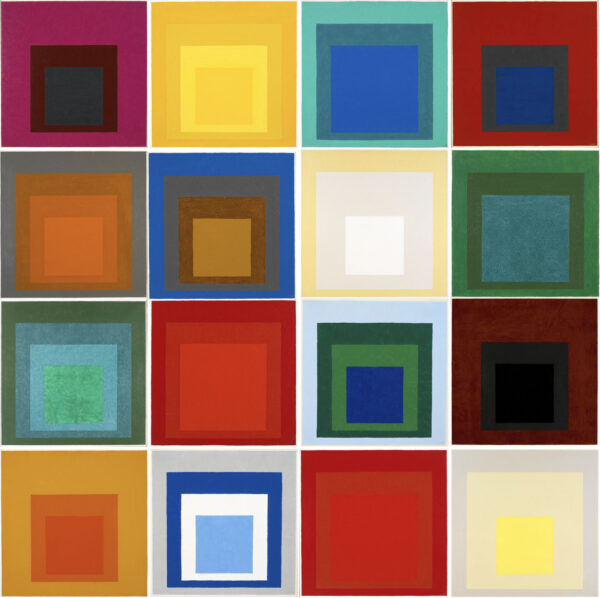
I could get lost in the vibrant color of Josef Albers’s Homage to the Square series of paintings. Right now I’m designing a set of stools each with three different-colored legs, and thinking about using these squares as palettes for inspiration.

If you love them too much to content yourself with a print, Hermés created a series of scarves based on these evocative squares. (I can’t link directly, but look for the photo of Albers over his squares.) The names of the scarves below are Formal Garden, Allegro, and of course, Joy.

square1

allegro

joy

Portals to somewhere special

27 October 2009

nuria_eltono_3

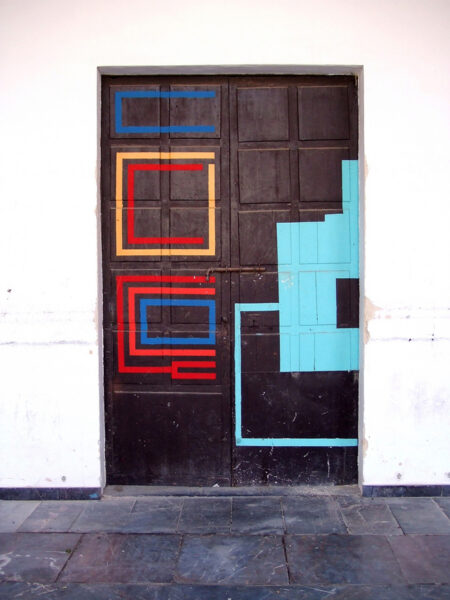
Painted by street artists El Tono and Nuria in Cordoba, Spain, these doors look like portals to somewhere special. And they probably are.

Cordoba is known for its courtyard gardens, of which the occupants are famously proud. I remember when I was there meandering the winding alleys, a good-natured young man a few years older than me and speaking no English insisted on leading me somewhere. I was 21 and wary, but he was headed the direction I was going anyway and so I followed at a distance. After a few minutes of walking this way, me suspiciously noting street names, him laughing at my suspicion, we arrived at a house with door wide open, framing a lush garden with an old woman sweeping the tiled floor. His home! After I greeted his mother and admired the courtyard, I was free to go, giddy and bewildered by the surprises that lay behind those foreign doors.

{via Unurth}

nuria_eltono_2

nuria_eltono_1

Practical magic

26 October 2009

copy_1_r

Arthur C. Clarke famously said, “Any sufficiently advanced technology is indistinguishable from magic.” With all the advances in the technologies becoming readily available to designers these days, it feels to me like I’m constantly surrounded by magic, constantly feeling amazed at what is possible in the world.

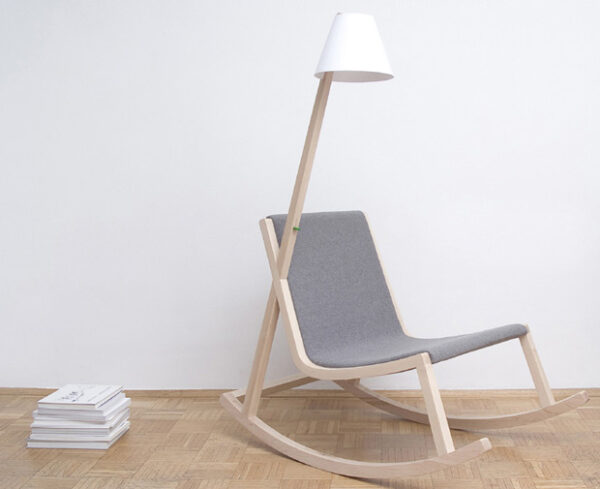
The chair above, called the Murakami chair by American designer Rochus Jacob, generates electricity by using a nano-dynamo in the rocker, which it then uses to power its own light. This harnessing of invisible energy feels so impossibly magical that it gives me a little burst of joy.

The fireplace below, designed by Camillo Vanacore, is intended to provide a safe and portable fire for heating purposes. The glass starts out opaque and turns transparent as the flames heat up, which does not seem like a necessary feature, but certainly adds to the magical feeling. But the real magic, for me, is enclosing fire in a glass, capturing its volatility and power in an inert vessel, kind of like the thrill of having a butterfly in a net, without the sad quality of restraining a living thing.

fireplace-in-a-can

When I look at these designs, I think of Clarke’s words and it strikes me that the meaning of magic is always changing. There was a time when switching on a lightbulb was magic, when firing up a car’s ignition was magic, when seeing an IM ping on your screen was like a flash from the ether — incomprehensibly magic. Now these events are as routine as can be. As technology shifts, and as designers integrate that technology into our lives, the limits of possibility are pushed outward. Magic hovers along that line.

More interesting than the fact that the concept of magic is shifting is how it is shifting. For a long time energy was transferred into work by strictly manual means — every unit of work done had an immediate and understandable impetus. (Similarly, every unit of food consumed or clothing acquired contained for the user a knowable and comprehensible set of inputs and forces that led to its creation.) The magic of technology slowly took away our understanding of these things. It moved sources of energy far away from the work they delivered — from the proximity of the muscles to the distance of the coal-fired electric plant. (Same with food, clothing, and everything else we consume.) There was magic in work that could be done without an immediate proximate cause.

Now, technology is finding magic in immediacy again. It’s the Murakami chair that really drives this point home for me. We’re so used to power coming mysteriously through holes in the wall that we don’t even question it, and yet power that comes from the intuitive rocking motion of our own bodies feels impossibly wonderful. All of these new power sources being explored — the dirt battery or the battery that runs on sugar — have a similarly magical quality, and yet they relate to the things in our world that are the most mundane and elemental: movement, light, earth, fire. Simple pleasures that for all their lack of pretense have a little mystery hiding within.

{via PSFK: chair and fire}

Coke’s joywashing expedition

23 October 2009

lg_bubbles

On Friday I had a post up on Brandchannel about a new initiative by Coca-Cola as part of their Open Happiness campaign. Coke is sending a trio of bloggers around the world for a year to “uncover insights about what makes people happy.” This latest installment in the soft-drink joywashing trend is notable for its intensity and scope — it’s not just an ad campaign, but a constant, year-long push spread over a range of social media platforms.

I think it’s an interesting idea, but it does grate on me to see Coke portray a brand-ambassadorship as a joy-finding mission. These kids are going to be spending barely a day in each country (206 countries in 365 days), barely enough time to exhale, much less derive meaningful understanding (or “insight”) into what makes people happy. But of course this isn’t an ethnographic exploration, it’s an exercise in generating brand stories — warm fuzzy narratives where Coca-Cola is a star character, if not the hero.

More interesting than the supposed happiness insights Coke’s floggers will uncover are the spontaneous interactions outside of Coke’s intentions that will undoubtedly occur along the way — the things that cannot be planned for or factored out when traveling in such unpredictable parts of the world. I don’t think this experience will deliver earth-shaking new insights into emotion, but I think it will illuminate moments of generosity, hope, selflessness, good humor, and compassion that will surprise us. For that reason (and perhaps a little vicarious living), I’ll be watching.

Brandchannel: Coke sends bloggers on an “Open Happiness” world tour

People in order

23 October 2009

I dare you not to giggle while watching this short film from the People in Order series by Lenka Clayton and John Price. The film presents people in age order from 1 to 100 years old.

The drum device is pure aesthetics of joy — an exuberant bang that runs like a unifying thread through the ages. It also distinguishes them: the four and five year-olds’ delicious pleasure in generating noise is a powerful contrast with the defiant staccato of the their 96 and 100 year-old elders — pithy reverberations that seem to say, “We’re still here!” Each age has its mind, distilled into gesture and sound.

{via Mental Floss}

Decorative play

22 October 2009

tops1

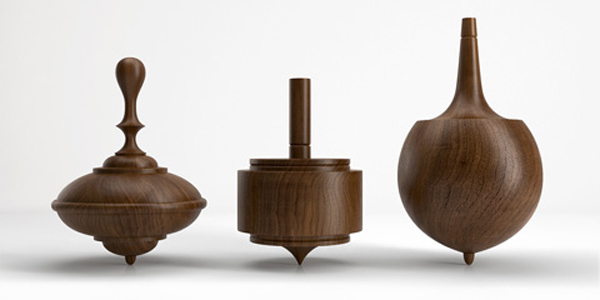
I love the form and craftsmanship of these tops by KleinReid for Herman Miller in homage to Charles and Ray Eames; the proportions are sweet and they seem like they have a nice weight to them. But they have the appearance of toys that are meant to be looked at, rather than played with. I wish they had a pop of color, maybe just a couple of thin stripes running around the latitude, like piping on a garment. It would make them more approachable, more like toys and less like executive desk ornaments.

(Compare with the color-dipped axe handles from the Best Made Co. — an axe is not a toy, but I have to say that these make slinging wood look like more fun than spinning it.)

axes

On the other hand, these quirky KleinReid vessels are incredibly haptic. I can almost feel the slightly irregular, muted, glazed surfaces in my mind, and imagine looping a finger through the perfectly-scaled openings to carry one home. The drippy edge where the glaze meets the foot is imperfect, but the imperfection is tantalizing. They have a similar gestural quality to the tops, but the exaggerated proportions, color, and tactile surfaces make them seem more toylike to me.

It’s remarkable that utilitarian objects and decorative objects could have more playful attributes than an object designed to be played with. But then, at $199 a set, perhaps the tops aren’t really meant to be played with at all, and the design is a fitting balance for an object whose relevance is more symbolic than functional.

kleinreid

Tops can be purchased here, when they’re back in stock. Axes here. Vessels here.

Making merry

21 October 2009

merry1

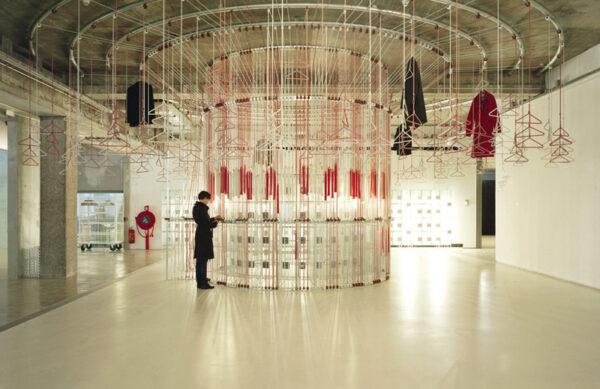
A simple way to make a mundane object more joyful is to transform it using aesthetic elements of an object you already know is joyful. Designer Wieki Somers’s Merry-go-round coatrack takes a garden variety museum cloakroom and uses the form, scale, and movement attributes of a popular playground toy to transform it into a delightful spectacle.

The coatrack was installed in 2008 in the Boijmans van Beuningen Museum in Rotterdam.

{via Core77, where you can see a film of the piece in action}

merry2

Joyful trucking

20 October 2009

riaz_trucks5

Riaz has these great photos of Pakistani cargo trucks on his site. He says:

What’s amazing about this is that these are just regular cargo trucks. The truck drivers put in this much effort into almost every single vehicle you see.

In Southeast Asia, especially Thailand, there is a tendency towards embellishment of buses and the like, but I have never seen anything like this! They may strike a Western eye as a little gaudy, but you can’t deny there is so much love in these designs. I’m especially struck by the contrast between the plain attire of the drivers and their over-the-top vehicles. I wonder if this somehow became a sanctioned form of self-expression, and so, in the face of sumptuary convention, all creative energy gets channeled here.

See the full set here: Truckistani

riaz_trucks6

trucks_drivers

Joy is relentless exuberance.

19 October 2009

chihuly8

Last week I had a post on DeepGlamour about the glamour of glass. As a complement, I was thinking about doing a piece here that explored glass’s joyful side. Glass finds glamour mostly in the context of architecture, formed in cold sleek panes. Joy requires it to be liberated from two dimensions, let loose, tinged with bright hues, and blown to the edge of implausibility. I immediately thought of Dale Chihuly and his prolific body of vibrant glassworks.

chihuly10

chihuly11

There is so much joy in Chihuly’s candy-colored glass balloons, the coral reef-like swimming pool floor (I would have fingertips like raisins before you could get me out of that), the organic sculptures mimicking a tropical flower pistil or the frilled maw of a giant clam, and the floats that bob like dinosaur eggs among the lily pads at the various botanical gardens where he showcases his work. But while I was poking around his site, I found something that to me was even better, and that totally changed the direction of this post.

I found drawings. And these drawings, done with equal parts love and haste, made my heart race right out of my chest.

chihuly3

chihuly4

chihuly2

These drawings, studies on the road to art, are for me more joyful than the sculptures they prefigure. Unconfined by the persnickety requirements of a brittle, fragile medium, they are pure expressions of Chihuly’s relentless exuberance. They reveal the desire that motivates the transformation of glass from amorphous liquid to novel form.

It’s heat and human effort that mold the glass, but more than that, it is the creative energy that bleeds off these pages. After the accident that cost him his left eye in 1976 (and a subsequent surfing accident that left him physically unable to hold the glassblowing pipe), Chihuly stepped back and assumed more of a directorial role in his process. These drawings, therefore, are the most direct connection between his eye, his brain, and his hands. For a designer, this is likewise true, as we are usually the initiator, and not the ultimate maker, of our work. While we need drawings or instructions that communicate our technical intentions to a fabricator, there’s no substitute for an expression of brute emotive force that will stir something inside the maker as well.

chihuly1

chihuly5

chihuly7

chihuly6

chihuly9

See more of Chihuly’s drawings here.

Cotton candy

16 October 2009

cottoncandy2

Wrapping up the post-game fashion week joyfinding, it’s time to let the inner child out. The Barbie-loving, Bubble-Yum chewing, magenta tutu-wearing little girl inside of me danced around the apartment when she saw these light, confected pinks, and then ran off to eat pashmak for breakfast.

The cotton candy vibe extended weirdly even to the hair at some shows, where technicolor riffs on afros (almost none of them black) sweetly framed the traditional model death-stares. Vuitton took the cake for volume, but it was Rei Kawakubo’s stiff, fuzzy ponytails that managed the fine balance between kawaii and cool, and really captured the irrepressible joy of spring.

hair1

L to R, Top: Paul Smith, Lanvin, Carlos Miele. Bottom: Luella, Louis Vuitton (I almost wrote Vuitoon – Freudian slip?), and Commes des Garcons. There were candy colors (not just pinks) at tons of other shows — Giles, V+R, etc. Also, Tavi made a rainbow of Lanvin dresses that is worth a peek.

I’m lying low this weekend to work on the book (the rainclouds above have thoroughly endorsed this plan) so you may see a few atypical weekend posts. Happy Friday!

How are we feeling today?

15 October 2009

2mto87uarljnirrxz0dv9q_montage1

A few weeks ago we learned that sociologists have created a happiness index using Twitter, and last week we received news that a Facebook app has been developed that serves as a sort of emotional barometer for the socially-networked world.

Emotion aggregation is an interesting evolution from the kind of topic-driven analysis we saw when people first realized they could use the internet to compile sentiment. Google, master of the search, has been publishing a “zeitgeist” of current trends in search. But less than a “spirit of the times” it represents more a mentality of the times — revealing what people are thinking about and pondering in a given period, rather than what we are feeling.

The first (and most engaging) project that I know of to turn this lens on emotion is We Feel Fine by Jonathan Harris and Sep Kamvar, which explores people’s emotions through blog posts and other web ephemera. The site allows you to view a wide range of emotions and filter them through criteria like geography, weather, age, and gender. (These images were the result of searching for joy under the program’s “Montage” movement, which overlays people’s joyful images with their feelings.)

This is a much richer look than the latest efforts, which reduce emotion to a linear scale. Happy or not, positive or negative. But the formula is a mystery. On days when millions of people are merely content, is the happiness rating higher or lower than on days when only a few hundred thousand are elated? Emotion does have a clear positive and negative dimension, but it also has dimensions of intensity, duration, and consequences not captured by such a reductive scale. It also, as we’ve seen in the explorations on this blog, has complications of language that make such distinctions even murkier.

enabot9mgjryuoivdgbkbq_montage

It’s very exciting that emotion has become so compelling a topic that its measurement has moved into the mainstream. I also find it intriguing that we’re moving in the direction of being able to take an emotional pulse of the nation, and see the impact of certain events on our collective mood. I don’t think these oversimplified indices tell us much, yet, but hopefully as they develop, they will become powerful tools for sociological study and fodder for more beautiful explorations into the cultural aesthetics of our emotional lives.

vujdql7xfcyynjfauiqvqa_montage

Angelic transparency

15 October 2009

angelictransparency

While there was a lot of lingerie-inspired sexiness on the runways for spring, there was also a kind of angelic transparency that was sweeter and more innocent. The looks feel less like they fell out of a dainties drawer and more like they floated in on a wisp of cloud or took inspiration from a pair of lacy dragonfly wings.

L to R. Top: Three As Four, Jil Sander, Valentino. Bottom: Fendi, Colette Dinnigan, Chado Ralph Rucci.

angelic_transparency2

Comical violence

14 October 2009

comicalviolence

No question that the economy has the fashion industry feeling hacked to bits, and this was apparent on the runways. At Commes des Garcons Rei Kawakubo’s clothes looked artfully pieced together from odd bits salvaged from a besieged factory. Interspersed with elegant minimalist pieces, Raf Simons’s show at Jil Sander had a few pieces with opaque layers largely eviscerated and overlaid with netting. But no one expressed the bathetic anguish designers felt at having their wings clipped with more humor and charm than Viktor and Rolf.

I can only imagine how the faces of the front row must have lit up to see these gored, sliced, and shaved tulle gowns come down the runway. Yes, they are marred by violence. But they’re so sweetly absurd that for me they are still an aesthetic of joy.

Using aesthetics of joy to create behavioral change

14 October 2009

Design is at its most effective when it encourages or transforms human behavior for the better. There’s a lot of talk about how we need adopt healthier or more eco-friendly habits. The onus is on us to make the changes, but design can facilitate the behavior and make it easier or more enjoyable to change. Examples abound: the George Foreman grill, dedicated recycling bins, 100-calorie snack packaging. All of these things make it easier to do the right thing. Easier, yes, but not necessarily any more pleasurable, which is where The Fun Theory comes in.

An initiative of Volkswagen, the Fun Theory is a series of experiments that demonstrate how joyful design can encourage positive changes in behavior. In the video above, a staircase goes from being the less-chosen alternative to the escalator to the preferred path after the addition of some giant piano keys. In another video, litter collection rises after an amusing noise is introduced to a public trash can.

The pre/post measurements are striking and really prove the point that aesthetics of joy — through interaction, play, sound, and surprise — can create real, immediate change in the way we live.

{via PSFK}

Cutevertising: high and low

13 October 2009

united-bamboo-cat-calendar-3

Last week I wrote about Microsoft’s new ads using a cute little girl and “happy” imagery to sell Windows 7. And now I’m seeing cuteness everywhere. Bunnies, puppies, cats in dresses — it’s all over the marketing world. It’s interesting to me that it’s both high and low, not just a mass market phenomenon. United Bamboo’s 2010 calendar, for example, features cats in miniature copies of dresses from the line’s latest collection. Given many of these dresses are retailing in the $600-800 range, it’s clear even the premium world thinks it has something to gain from cutevertising.

united-bamboo-cat-calendar-1

On the canine side of things, Modcloth, a vintage and indie fashion site, use their mascot Winston to promote their eyewear line to comic effect.

winston-modcloth-glasses-1

But not all furry things in ads are promoting expensive dresses or fancy shades. These guys just want you to make a “sweet million” with the New York Lottery:

sweet-million

I don’t know how long this trend will sustain itself, but it’s certainly fun while it lasts. What’s next? A Karl Lagerfeld kitten? Piglets selling cosmetics? Birds chirping out a car company jingle? Guinea pigs extolling the virtues of Viagra? Well, that one might in poor taste…

{United Bamboo + Modcloth examples via Refinery 29}

Light and airy

13 October 2009

lightairy

I love these light, feathery dresses that look like they’re just about to float away.

L to R: Chado Ralph Rucci, Oscar de la Renta, Valentino.

Joy on the runway: pops of yellow

12 October 2009

yellow1

You wouldn’t know it by the models’ expressions, but there was plenty of joy on the runways for next spring/summer. I’ve picked a few themes and will be posting throughout the week.

I love these pops of sunshiny yellow. I’ve been told that yellow doesn’t love me (something about my pale, pinkish complexion) but there are so many shades out there for spring, I think there must be at least one for everyone.

L to R. Top: Wunderkind, Devi Kroell, Rochas. Bottom: Proenza Schouler, Luella, Karen Walker.

yellow3

Visible storage

12 October 2009

met_roof_sunset

Indian summer is the gift that keeps on giving in New York this year. Perhaps to make up for the drizzly summer, we keep getting these gorgeous sunny, mild weekend days. This Saturday I walked through the park and met my friend Emily on the steps of the Met. We set out in search of the Vermeers, which are quietly luminous and very worth the trip. But we soon discovered what felt like the real find of the visit: visible storage.

I’ve been going to the Met for a long time, since I was a child, but I was surprised and delighted to find this wonderful set of displays. It feels like you’re getting a behind-the-scenes tour, with all the paintings and artifacts crammed in together in row after row of glass partitions. The closeness of everything forces new connections, new relationships between items. Without the artful arranging, you’re free to see things in a new way. It feels a little like a treasure hunt, and was easily the most exciting part of the visit.

The roof is still open for drinks, and we arrived just in time for the spectacular sunset above. It’s always hard to believe when the blue sky turns pink and purple, and the art took a back seat for a moment as everyone turned towards the city and watched the beautiful spectacle unfold.

visible_storage

visible_storage2

Sunset image, mine. Met images, pazzia.