Archive for December, 2009

2009: a look back

31 December 2009

mandala

Of all the years to start a blog about joy, 2009 certainly seems the least likely. The recession deepened, the foreclosure crisis widened, the wars continued. This was the year of record unemployment, of bailouts, of TARP payouts and paybacks. It was a year of pirates in Somalia and protests in Iran. It was the year of the summer of death, where it seemed just about every day we lost another significant public figure, from Ted Kennedy to Michael Jackson, Walter Cronkite to John Hughes, Merce Cunningham to Michael Jackson. As if symbolic of our general mood, dust storms turned the sky down under an eerie red.

But the low emotional mood was precisely what I had in mind when I embarked on the Aesthetics of Joy project last January. I wondered if there was something in the things that surround us that might be able to provide moments of delight in this landscape of gloom, like little joyful oases. And if so, I wondered, could we design the things around us to bring us more of these moments? If we could, we might see the benefits not just in mood, but in improved social relationships, physical health and well-being, and perhaps even sustainability, as we hold onto our joyful things longer and take better care of them.

When I started this blog in May, it was a research tool for me. I used the posts as a way to think through certain issues that puzzled me. Why are bubbles joyful? What is it about bursting motions that is so joyful? Can joy be evil? To my delight, you all seemed to find the same questions intriguing, and as the year went on, I’ve been surprised and enchanted by the thoughtful commentary you’ve added to the discussion on joy, whether here on the site or by email. The feedback I’ve received this year from the blog has been so incredibly helpful in refining my thinking on joy, and I can’t wait to share more as the book progresses and the blog continues in the new year.

To wrap up the year, I took a look back at what were the most-viewed posts of 2009. Here are the top twelve. If you happen to be a new visitor, these posts should give you a good idea of what AoJ is all about.

1.  A little wednesday afternoon joyful art…
2.  Joyful project: surprise balls
3. Making sense of color
4. Big sweet tooth
5. Aesthetics of joy or eyesore? happy roses
6. Emotion + graphic design case study: Pudding packaging
7. Invisible dogs
8. Joyful culture: flash mobs
9. “A little piece of happy”: Trident tries to get in on the joy wave
10. The joy of faux tilt-shift photography
11. Joy of hula hoops
12. Humanthesizer: music + movement = joy

It made me happy to see a few of my favorites (like nos. 1, 3, 7, 11, and 12) in the mix. I also like that the top post was an art post — there will definitely be more of that in the new year. And if there’s anything else you’d like to see more or less of, let me know.

That’s all for 2009. Thank you for reading, commenting, and supporting AoJ this year. I hope you have a joyful day and see you in the new year!

xx Ingrid

Scroogenomics, gifts, and emotional value

30 December 2009

1437904057_f2c1048ce9_b

Holiday gift-giving is usually a source of joy. But on the NYT Economix blog yesterday there was a piece that considers the flip side. A new book by Wharton economist Joel Waldfogel called Scroogenomics: Why You Shouldn’t Buy Presents for the Holidays, lays out an argument that gift-giving is full of economic loss. Essentially, the argument goes that since the decision-making on what to buy as a gift is a step removed from the user, the matching of needs/wants and objects is inefficient, and therefore wasteful. (Waldfogel has some empirical data to reinforce his claim which you can read more of here. Perhaps he also has a bunch of relatives with particularly bad taste…?) It’s fair to say that you rarely receive as a gift the things you’d buy yourself, but does that necessarily mean that holiday giving is a deadweight loss?

In the Times piece Harvard economics professor Edward L. Glaeser offers a counterpoint. He suggests that the act of giving imbues objects with value beyond the material or utility of the item; presents become valuable as signals of affection. The object given may not be exactly what the giftee desires, but the fact that the giver took the time and effort to select it makes the receiver feel loved. In Glaeser’s view, the diminished use value is more than compensated for by an increased emotional value.

Economics has much more trouble with emotional value than with use value. Emotional value is messy and mercurial. It changes not just from person to person but from day to day and from mood to mood. A spoon is basically as good at its job today as it will be tomorrow. Not so with a trendy gadget, a piece of jewelry, or a prom dress. Emotional value is the reason you can feel both vexed and enchanted when you unwrap a hand-knit sweater from Aunt Gladys on Christmas morning. The object is both utterly worthless and totally priceless. It’s also why unwrapping a gift certificate is enjoyable, yet vacuous. It offers the freedom to satisfy your true desire, in a package that shows that someone didn’t spend much time thinking about you. Bummer. In essence, both Waldfogel and Glaeser are right in their ways. Gifts often do entail a deadweight loss — we often receive things we have utterly no use for — and yet they are also indispensable components of social interaction. A gift that feeds only the soul is still valuable. And for the rare gift that manages to be both a signal of affection and a perfect match for the recipient’s needs — perhaps that quantity and durability of value compensates for many other gifts that fall a little flat.

Waldfogel’s solution is to stop the practice of gift-giving altogether. But gifting would be nearly impossible to give up. Not only is the behavior deeply entrenched across cultures, but there’s also some research suggesting the behavior is hardwired into our human nature. Glaeser suggests we make it easier for gifts to be exchanged and returned. I’d offer another suggestion: giving more gifts with handmade, personal components. By investing more of your time and effort in the gift, you increase the item’s emotional value. At the same time, you may find you spend less money on things that would be mismatched to the recipient or undervalued. This year, one of my favorite Christmas gifts was just this kind of gift: two beautiful framed prints of my best friend Annie and me as kids. (As you can see, we were basically inseparable.)

ingrid_and_annie1

ingrid_and_annie2

Though other gifts I received this year may be more exciting or more needed or more exactly matched to my wishlist, none is more special. And long after all the pleasure and satisfaction has been wrung out of my other gifts, these will still be on my wall, making me smile.

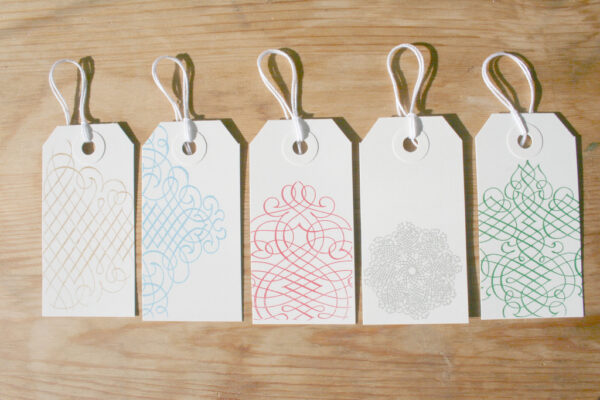
Image (top): handmade gift tags by Sarah, and available on Etsy, (in case you happen to be a little late with some of your own holiday gifties!)

Lady Gaga’s most joyful outfit?

29 December 2009

32287756

From time to time this blog needs to consider serious subjects. Fortunately, today is not one of those days. This week the NYT style section gives us a thoughtful discussion of Lady Gaga’s significance to fashion culture, accompanied by a retrospective of sorts in slideshow-form. With so many examples and such a diverse array of looks to choose from, it’s hard not to have favorites. (See more looks here.) But which are the most joyful?

The overly burlesque looks are out of contention, as too much sex crosses the line from joy into some other sort of emotion. The fact that we’re going for inner child here, and not inner sex kitten, rules out a lot of looks. Most of her looks are evoking cool, or anti-cool, or just plain weird. While the ethos is playful, the aesthetics are by and large very adult.

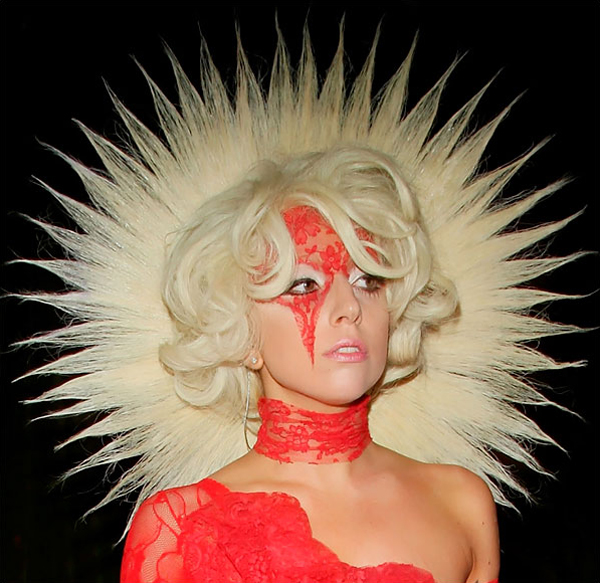
But I found a few examples joyful aesthetics in the mix. The bubble-dress, below, has my vote for the most absurdly, childishly delightful look of the bunch. It’s almost as if she got swept away by a cluster of dishwashing suds and dropped onto the stage with no time to change. I love the way the colored lights reflect in the surfaces of the spheres, iridescent. The radiating hair-halo, above, also has a joyful quality to it — a costumey echo of a Medieval nimbus, or a warm, golden sun. I also like the reflective, light-scattering quality of the mirror ball look (bottom). The curves of the skirt have a joyful arc, but the sharp triangular panel earns demerits. Sharp things trigger a primal fear reaction deep in a part of the emotional brain called the amygdala. The heightened alertness and emotional intensity of sharp things is odds with joy, though it’s probably just right for the kind of reaction Gaga is typically going for.

Any other Lady Gaga styles that give you a sense of delight? Any joyful looks I overlooked?

NYT: When Lady Gaga Appears, So Do Her Many Influences

28044114

lady-gaga-disco-ball-g

Epitome of joy

28 December 2009

bargello_cupid

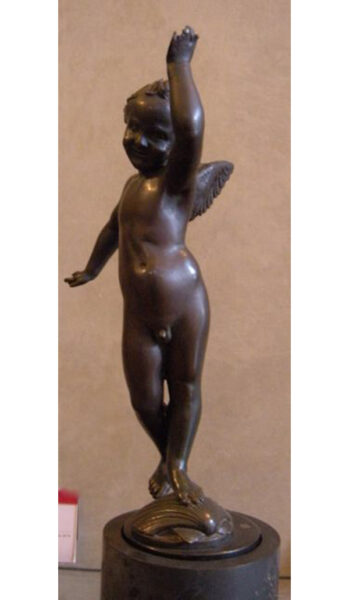
Virginia sent me this a couple of weeks ago with the note: “This little guy is in the Bargello in Florence and always seems like the epitome of joy.” I couldn’t agree more.

Baby fat, sweet little wings, and the upswept gesture all give him an infectious kind of aura. It is always interesting to me when sculptures manage to achieve such lightness in heavy materials like bronze and stone. But my favorite part about the statue is the way he balances on a scallop shell. It makes the proportions odd and surprising, and sets a foundation for the composition that is just a little bit magical.

Holiday joywashing

21 December 2009

If you manage to let your fast forward finger slip from the DVR remote for one second this holiday season, you’re practically guaranteed some joy. I haven’t had much time for TV lately so I’m sure I’m missing about 90% of the joy-filled ads out there, but even the few I’m getting show “joy” penetrating just about every industry.

Hyundai is offering more comfort and joy with their holiday sales. Walgreens is exhorting you to “find your joy” in one of their drugstore aisles. And Kibbles ‘n Bits is weighing in on the question of whether animals have emotions, offering to give your dog “more joy.” These are the ones I’ve managed to catch — have you seen any others?

In some cases, these are just holiday ads, one-offs that use the word joy as a proxy for keeping in tune with the season. In other cases, marketers are using the holiday timing to launch a joy-based positioning for the brand that will endure after the holiday season. It will be interesting to see which ones linger and which ones fade. My hunch is that on balance the joy-space will be a lot more cluttered come January/February than it was in September before the holiday madness started.

I don’t know what to make of this strategy, really. Branding is in large measure about differentiation. Why launch a new positioning at a time when everyone else is going to be saying exactly the same thing? I guess I’ll have to hold this critique until the new year, when we see who is holding fast to their joy taglines. In the meantime, unless you’re a scrooge, you may as well enjoy it. Joy seems to have dollar value this season, with lots of pre-Christmas sales. It doesn’t hurt to be in a good mood as you wander the aisles with the last-minute throngs!

Happy joy-finding!

Wearable microcosms

17 December 2009

cute_rings

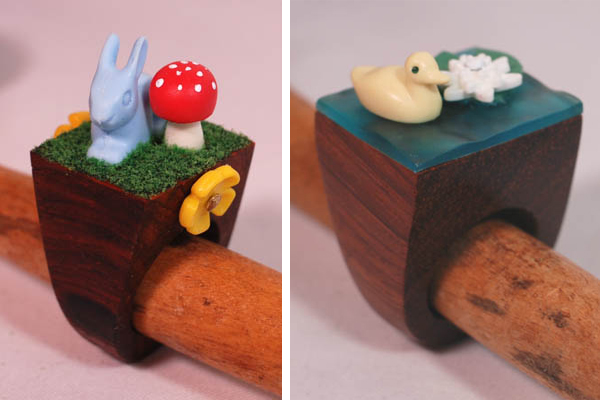
These sweet rings by John Medley and his partner just make me smile. They’re like little wearable worlds —  cute microcosms that travel with you wherever you go.

Available here. (I find their profile totally joyful too!)

Why we celebrate

16 December 2009

dog_lights

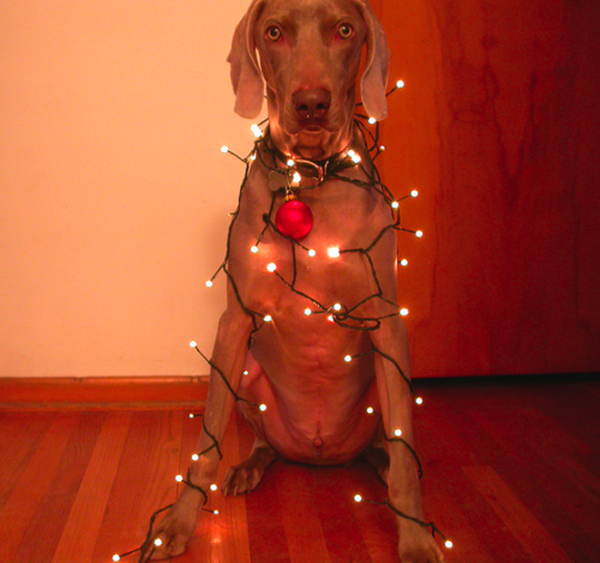
With all the holiday festivities upon us, I’ve been thinking a lot about joy’s celebratory side. (Please forgive if these thoughts are a little rough, as I’m also simultaneously editing my thesis document and my attention is a little divided.) It’s interesting to think about what kind of adaptive value celebration has in human life. Why do we celebrate? Or rather, why do we need to celebrate?

We know that cultures all over the world celebrate, and though we celebrate in different ways, we often celebrate similar things: lifestage transitions, marriages, births, harvests, seasonal shifts, and good fortune. And though celebrations of foreign cultures may seem filled with alien customs, aesthetically there are many common elements. Sweets, such as cakes or candies, are common, as is alcohol in cultures that consume it. Bright color, music, and dancing are typical in celebrations around the world. Light is a particularly important element, as in the Christmas tree, the menorah, and the fireworks displays that commemorate a range of festive occasions. And exuberant bursting gestures — like those of fireworks, but also the breaking of a piñata, the throwing of confetti, and the open-armed jump for joy — seem to originate from the very nexus of joy within the human soul.

It seems clear to me that celebration is a universal human drive that like curiosity or lust is hardwired into us by evolution. That the aesthetics of celebration also have universal elements suggests that perhaps these elements have had a long association with events to be celebrated (sweetness, for example, would be a natural correlate with fruit harvests, and light a natural relationship to seasonal celebrations). The question is, is celebration itself adaptive — does it have a function that aids in the survival of humans and the propagation of the species? Or is it a byproduct of evolution, having evolved in the company of other traits that enhanced gene dispersal? I haven’t read any definitive treatment on the subject, but I believe there must be at least some adaptive value. In his book The Art Instinct, evolutionary theorist Denis Dutton references the importance of social cooperation in the evolution that got Homo sapiens where we are today. I think celebration is like a social form of reward that motivates cooperation and helps maintain social harmony. It also strengthens bonds that may be needed in tougher times. (Perhaps companies who eliminate holiday parties in an effort to save costs might be well-advised to reconsider, given these insights.)

I hope you have a wonderful holiday this season, whatever you are celebrating! And if you have any thoughts on this topic, please share them: How else could celebration be adaptive? What are celebration’s benefits? How is celebration good for us?

Image: Michael™. Poor dog!

Joy is a green Christmas tree

15 December 2009

tree_power1

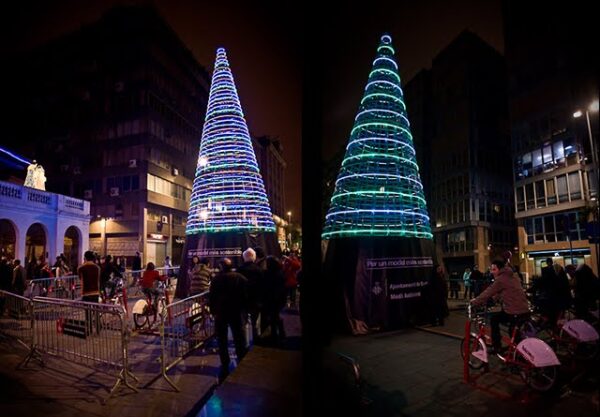
These joyful Christmas cones in Barcelona’s Mercat Santa Catarina square are bike powered! Passersby can hop on for a few minutes to keep the LEDs going. Now if only they could find a way to get the Rockefeller Center skaters to fire up NYC’s big tree…

See more bike-powered holiday installations on Vanessa’s joyful blog for the love of bikes.

Firefly stool

14 December 2009

Well, I’m back! And I must say, I have really missed my daily posts. On Friday, I presented the masters thesis portion of Aesthetics of Joy — the theory as well as ten furniture concepts and a designer’s toolkit for creating joy. Over the coming weeks I want to share some of these ideas, as well as revel in some of the holiday joy I’ve missed while I’ve been in thesis isolation.

This video shows one of my furniture concepts. It’s a stool based on the idea of a firefly lantern. I could imagine a bunch of these scattered around a garden restaurant or bar, gently lighting up the night. The lights are LEDs driven by an Arduino board, programmed to pulse randomly using a sine wave function. Getting the lights to look like fireflies was no mean feat, and required a lot of fine tuning of the code. Fortunately, my electronics professor Liubo Borissov was extremely generous with his time in helping me get this going.

The inspiration for the stool is the magic aesthetic, which has to do with joy from things that seem uncanny, implausible, or impossible. Magic is about the apparent defiance of ordinary laws of nature, and for me bioluminescence has always been a conduit to that strange and wonderful magic.

Joyful jewelry: Calder’s necklaces

4 December 2009

Calder Jewelry

large_necklace1943

Taking a momentary break from self-imposed writer’s isolation period because I could not resist sharing this. Did you know that joyful mobile-maker Alexander Calder also designed jewelry? Of course, he’s designed many joyful things, besides mobiles — his Circus for one, which was at the Whitney last year, and a variety of toys. But it was a delightful surprise to me to learn that he created about 1800 pieces of jewelry in his lifetime, many for his wife, Louisa.

I love the radiating gestures of the pieces — like a sun, stars, or fireworks. Also, isn’t it interesting how the image of Louisa’s dressing table (below) kind of looks like a mobile?

{via Birds of Ohio}

caldernecklaces

louisacalderjewelry

amico_boston_103838887