Archive for January, 2011

Transcendental aesthetics

23 January 2011

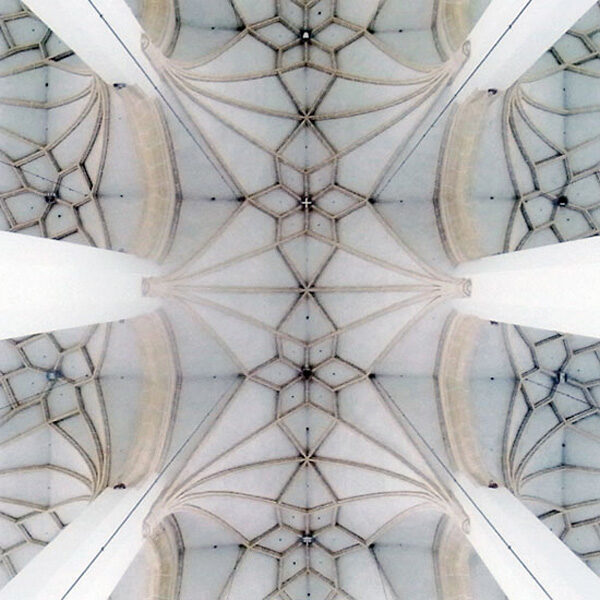
Awhile back, the website Science and Religion Today asked me to write a short piece on the topic of aesthetics of places of worship, and I thought about some of the ideas in that piece when I saw these amazing images of vaulted ceilings from the book Heavenly Vaults, by David Stephenson. I realized I never posted the piece in full here, so I thought I share these ideas from the archives:

People seek many different things in a spiritual experience, a fact attested to by the variety of religions and rituals practiced around the world today. But if there’s one motivation that all faiths seem to share, it’s a desire for transcendence — a wish to rise above mundane concerns and commune with a higher or more complete entity. When we worship, we look to shift our perspective away from the trivial towards the big picture, to put ourselves in context of a larger whole. Can design help us do this?

In short, yes. Design won’t make believers out of atheists, but it can certainly provide conditions for deepening the experience for the spiritually inclined. Researchers studying awe, an emotional state closely linked to transcendence, believe that a key trigger is a sense of vastness. Encountering objects or spaces that are extremely large in scale, from Ayer’s Rock to the Grand Canyon, stimulates what psychologists call a need for accommodation — a need to take this new experience and fit it into our existing mental models, stretching them in the process. As our mental models struggle to accommodate the power behind works of great scale (both natural and manmade), we feel smaller by comparison. Our focus broadens, which effectively minimizes our daily preoccupations. The builders of the great cathedrals, the Angkor temples in Cambodia, and Easter Island’s famous moai statues all understood, whether explicitly or intuitively, the power of great scale to inspire this perspective-shifting, spiritual sense of awe.

Scale can be particularly effective when the exaggerated dimension is height. Earthly existence naturally has a vertical orientation, defined by the gravitational force that holds us to the earth. Upward directionality is associated with lightness, air, and spiritual thoughts, while downward brings connotations of heaviness, earth, and physicality. Some religions conceptualize this vertical dichotomy as a moral one, with heaven above earth and hell below it. And many religions conceive of the spirit as a weightless entity, which is freed upon death from its gravity-bound body. Defying this downward pressure by turning our gaze upwards naturally leads many of us to a more spiritual frame of mind. Structures that are upwardly expansive feel more conducive to worship than those with low, dark ceilings. This effect can be enhanced by adorning the ceiling with elements that cause the gaze to drift upward, such as lighting fixtures, ceiling frescos, or skylights.

Turning the gaze upwards has another effect: it allows more light into the eye, and light is another aesthetic element that can enhance our spiritual experience. Light is a common metaphor for deities and a proxy for their blessing. In Genesis, God’s first act after creating heaven and earth is to proclaim “Let there be light.” When a religion wins a convert, they say he has “seen the light,” and the object of spiritual quests is “enlightenment.” Many early religions, such as those of ancient Egypt and Greece, featured gods of light or sun as primary deities. It makes sense that light would be so prominent a feature in worship, considering its significance to our survival. Light was certainly on the minds of gothic cathedral builders when they developed the practice of using flying buttresses. By taking pressure off of the walls, these exterior structures allowed for taller, lighter cathedrals with vast expanses of glass windows that were previously impossible. Structures of worship are at their most sublime not just when they’re bright, but when they call attention to the light and focus our gaze on it. Stained glass windows are one way architects of religious structures have done this. Others work with natural light. A particularly beautiful example is Osaka’s Church of Light, designed by Tadao Ando. The cuts in the expansive structure shape the light, giving it form and presence. The result is an expansive space with a transcendent glow.

Surely there are other aesthetics more specific to different religions that can enhance the experience of prayer and spiritual contemplation. Features such as the structure’s shape, color treatments, and level of adornment all vary according to belief systems. But these three elements — scale, height, and light — seem to have deep roots in human nature or cultural practice that make them particularly conducive to achieving spiritual communion. Can you pray meaningfully in a dimly lit, undergound cave? Surely the answer is yes. But an expansive, well-lit space is more likely to put you in a prayerful mood.

Images: DesignBoom
{via}

Anticipating the snow…

11 January 2011

I missed the last blizzard, so the forecast title “Major Winter Storm Set to Clobber Northeast” holds a certain kind of poetry for me. I’ve written at length on the joys of snow in the past, from my own personal memories to its more universal attractions, so I’ll try not to be repetitive this morning. I love snow for the very reasons practical people dislike it – it slows things down, confounds our rhythms, accumulates without regard to all the Very Important Things we have to do. It creates new patterns. It opens spaces for indolence, daydreaming, and rediscovery. Yes, it will get wet and grey, it will slosh into your boots, it will calcify into unmelting, inconvenient drifts. But before it does that, it will fall pure and light from cold clouds, and it will be perfect.

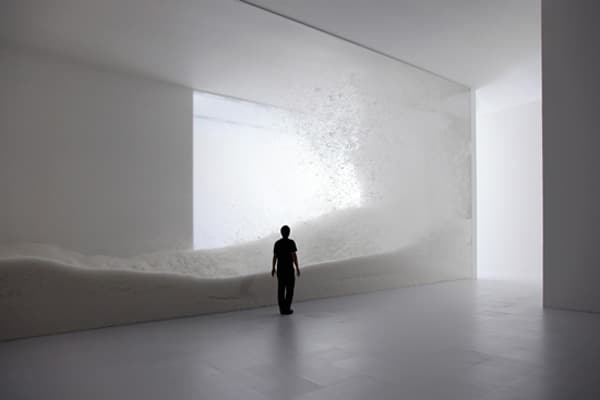
Anyway, it’s coming, so you may as well find a way to enjoy it! I’ve been wanting to share this piece for awhile. Called Snow, it is an installation made from feathers by Tokujin Yoshioka exhibited at the Mori Art Museum in Japan. It amazes me how beautifully the feathers reflect the movements of snow, and how deep the simple sensory pleasure of those textures and movements feels. There’s also a video, here. I hope it stirs up some joyful anticipation for the slow, snowy days to come…

The joy of illegal rainbows

2 January 2011

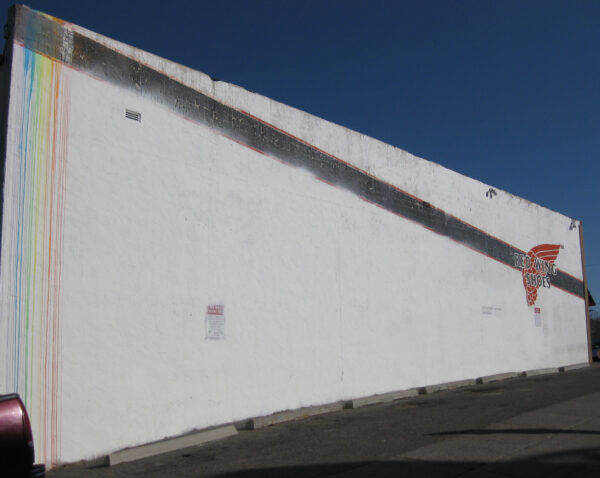
A wonderful find, from my dear friend Mara of Neither Snow, is this “rainbow warrior.” The warrior is a street artist working in Albuquerque, using spilled paint to pour rainbows off the tops of buildings. He (or she)’s really got some people riled up (see newscast, here) and it strikes me as remarkable that people can be so dour in the face of rainbows.

The charm of the story is in how the community has rallied to the warrior’s defense. This Facebook page has drawn 1,492 fans “in support of the Rainbow Warrior, whomever s/he may be.” And the soul of the story is in the warrior’s own words. This is the warrior on his/her inspiration for painting the rainbows:

About three or four years ago … I was feeling really depressed and I had this notion that if I went out and painted a rainbow, maybe someone would see it and feel what I was feeling or feel anything as intensely as I was. The first one I did, I just literally dumped the paint over the side of a pretty ugly, abandoned, alleyway building.

And this is the warrior on street art:

I want to inspire other people. That’s part of all my art; it’s always positive. I think I chose street art to inspire somebody else in a way that’s outside of the box. Like somebody who wouldn’t normally be exposed to street art, somebody who would just walk past it. Street art really saves a lot of people who are down in their lives and on their luck. This is their one and only outlet. Plus, you get an immediate response from people. A lot of times it’s just, Look at that graffiti on that freeway wall. But maybe the graffiti on the freeway isn’t the ugly thing, maybe that’s not what they’re angry about. Maybe they’re angry about how for the last 10 years you’ve been driving through this prison freeway with these big ugly gray walls and it just took the graffiti to point out the ugly that was already there.

I find this tension – between the forbidden act of graffiti, technically vandalism, and the delight people are discovering as a consequence – acutely compelling. Is an illegal rainbow still joyful? Here’s a letter writer commenting on the rainbow warrior situation:

So, somebody lays down a rainbow on the thing, a piece of art (and yes, it is art, even if it is “free,” and maybe especially so) that pokes fun at the mess, that makes me grin and say, “That’s a little better!” As a life-long citizen of Albuquerque, as someone who has had his very personal property damaged by genuinely malicious individuals: this isn’t the same thing. Is it graffiti? Yeah. Is it the same as somebody tagging a vulgar word on the car my parents gave me when I went to college? No. The intention of the rainbows is perhaps mischievous, but it is definitely not malicious. The intention, and the execution, is a wink, a laugh, a little unexpected burst. Worth a slap on the wrist and a good talking to, nothing more.

(Ok, and now I’m going to pause, because the 400 words and 45 minutes I just spent finishing this post have vanished into the ether that is this charming second day of the new year. [Deep breath and a moment to convince myself it will come out better the second time around.] Ok…)

I like this distinction between mischief and malice. The mess the writer refers to is the Anasazi building, the most public of the warrior’s targets, a high-rise which had recently been taken over by the Albuquerque government because the developer was charged with fraud, (a crime with no discernible aesthetic value). I like the idea that the rainbow has in a way recast an unfortunate incident for the citizens of the city. Redemption, via transgression.

How important is this element of transgression in the joy we feel from street art? Is there something inherent in the violation of boundaries that fuels our pleasure when we look at it? The carefree disregard of the strictures of private ownership and the numbing conventions of urban aesthetic culture? Maybe our delight is less about the vibrancy of the color, and more about the irrepressible spirit that put it there.

I’ve been wondering this in the wake of a visit last week to Wynwood Walls, a collection of murals in an artfully dingy Miami neighborhood. Wynwood brings together works by a range of street artists, well-known names like Futura, Shepherd Fairey, Nunca, Space Invader, etc. under the sanction of gallerists and developers, in a project that dropped out of Art Basel 2009. I really like a number of these works (particularly the piece by Nunca, below), and I recognize that the mainstreaming of street art gives these artists a chance to make a real living, but I can’t help but wonder: Is some of the joy lost by bringing these works into this kind of walled garden? Tamed by the light of legality and legitimacy, are they just a bit less vibrant, a bit more inert?

Maybe my previous question – Can an illegal rainbow be joyful? – had it backwards. Maybe it’s precisely the illegality that touches us. Mischief, with its attendant unpredictability and freedom, makes us feel vicariously free.

Thoughts?

By the way, if you find yourself in Miami, definitely make your way over to Wynwood and see it for yourself. Have lunch at the Wynwood Kitchen and Bar and wander the zillions of galleries which seem to have sprung up, perfectly distressed-looking, practically yesterday. It’s a nice day out, and a welcome departure from the excess of the design district.

Rainbow Warrior images via Patricia Austhoff and The Fibe Squad. And again, thanks, Mara.