Archive for May, 2011

Happy birthday, Aesthetics of Joy

23 May 2011

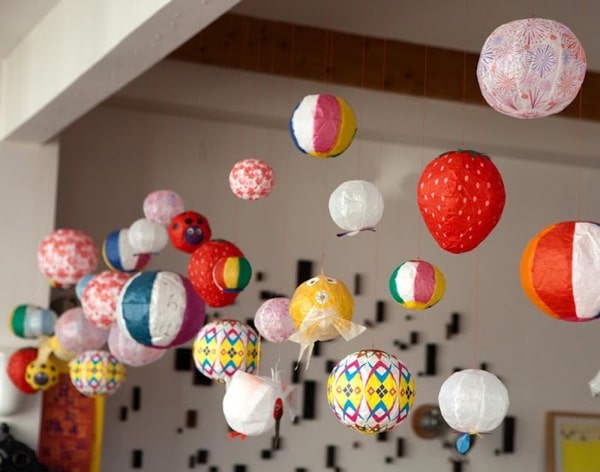
Paper balloons 02

Two years ago today I started this blog as a way of launching this little idea I had out into the world and seeing if it could be real. I feel as if I set one of those little toy boats into the circular pool in Central Park, only to find it’s become a real boat on a broad, blue ocean.

In the past two years, some of my greatest joys have come through this forum. From your thoughtful emails and comments to your inspiring tips and links, I find myself bowled over daily by the curiosity and generosity with which you engage with me in this adventure. I’m humbled and grateful that you share your time and insight with me on how you see the potential for more joy to be designed into the world. If only you knew how much you’ve challenged, encouraged, and motivated me over the past two years, as I’ve undertaken this daunting task of trying to understand and codify the aesthetics of joy.

In truth, this blog started as a way to catalog inspiration and think out loud while I worked on my book. It’s become so much more than that. The book is still not done, but when it is it will be immeasurably richer for the dialogue here. But more than that, I’ve seen the purpose of the blog in its own right, and it has given me ideas for other projects – exhibits, designs, essays – that I hope will also come to fruition.

Thank you for a wonderful two years, and here’s hoping for more joy in the years to come!

Xx Ingrid

Image: paper lanterns by and available at uguisu

Joyful sidewalks, joyful cities

3 May 2011

Yarn01

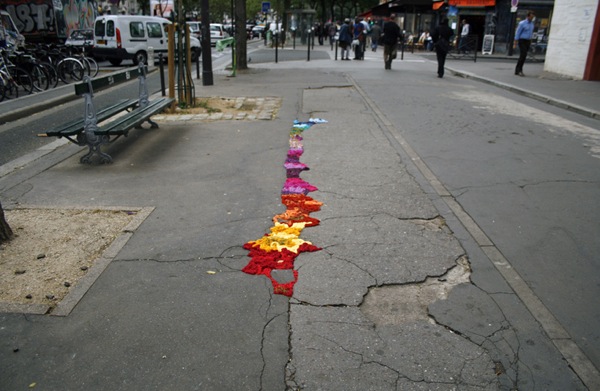
They look almost like brightly colored mosses, don’t they? Like some new form of street lichen. Or a kind of chromatic filling compound. A rainbow grout.

This set of sculptures by artist Juliana Santacruz Herrera is a particularly striking example of yarnbombing, a form of knit or crochet-based street art that frequently reacts to the urban environment. In Herrera’s case, this means applying braided fabric in looped forms to cracks in the sidewalks of Paris. Like the pothole gardens and lego repairs I’ve written about in past posts, Herrera’s works use delight to call attention to the breakdown of infrastructure in the city. Like other yarnbombing projects, they work with maximal contrast – in color, contour, density, and texture – to catch our eyes and make us take notice. While they don’t actually fix the problems they’re addressing, it’s possible that inducing this kind of positive affect makes people more inclined to act to change their environments. More than an angry letter or a protest, these works create a desire to share with others, creating a kind of social momentum.

Herrera’s works are one more example of a phenomenon I call joyful repair – the act of mending or calling attention to a damaged element of the environment using color, texture, playful gestures, and other aesthetics of joy. It’s a form of joyful activism, which tries to bring about change through positive emotion, and it’s one of my very favorite applications of aesthetics of joy.

Yarn04

Yarn03

Yarn02

Yarn05

Yarn07

Yarn08

Yarn09

Here’s another example I’ve had in my files for awhile. Working at a slightly smaller scale, London artist Ben Wilson uses chewing gum splotches as a canvas for tiny, brightly colored sidewalk art. Wilson has been creating the paintings since 1998, and estimates he’s made over 10,000 of the little works! Interestingly, not long after he began his gum-painting endeavors, people began making requests for particular designs, often commemorative. So what began as litter has become an odd little system of tribute, like plaques on park benches or in front of newly planted trees. People want to be associated with something they feel good about, and with a little color and charm, that even could be improperly discarded chewing gum. The sidewalk at first seems an unusually mundane place for this sort of personal connection, but maybe not. After all, the sidewalk is the most intimate of transitory spaces in a community, the backdrop for so many of our daily dramas and spontaneous joys. Filling its holes, reclaiming its blemishes – in some way these are a deeply integral form of reconstruction.

Chewing Gum Art by Ben Wilson

Ben Wilson

Chewing gum art by ben wilson 7

There’s something else here, too. Projects like this are a signal that someone cares about a place, that the condition of that environment matters to someone. Someone is paying attention to the details. To make something beautiful is to invest time and energy in it, and these two are the most valuable, limited resources we have. We perceive this signal of caring and passion, often unconsciously, and we typically follow in kind. We read our landscape for cues about how to treat it, we draw inferences about the inhabitants, and we subtly alter our behavior to maintain this condition – or enhance it. These aesthetic signals often become a discourse of community, a conversation between the denizens of a place that leads, via a subtle form of one-upmanship, to the organic growth and improvement of our favorite places to call home. Alain de Botton has written (I’m paraphrasing here) that one of architecture’s purposes is to inspire us to be better people, and I would say the same for any of these urban interventions. We see improvements, and they unconsciously motivate us to improve ourselves.

Favela painting 1

Joyful repair projects can serve as jumpstarts for this process. This project, though not new, is a great example of this principle applied over a large scale. Called “Favela Painting,” this brightly colored village is the work of Dutch artists Jeroen Koolhaas and Dre Urhahn. Working in a slum outside Rio, their goal is to use art “as a tool to inspire, create beauty, combat prejudice, and attract attention.” The care and passion embodied by the murals effectively transforms the favela from outside in. Some really thoughtful words about the effects of this project, on the Magical Urbanism site:

‘Favela painting’ affects the aesthetic order of how favelas are perceived from within and outside its natural embryonic growth. Colour brings hope. It brings a different understanding of space and its people, inviting others to co-create and co-represent much more constructively and positively life here. It appeals to our senses in a way that we do not reject but embrace these places and the potential for better life. It articulates a different discourse of social change; of engagement, contributing to improve life for favela dwellers.

It’s hard to say it any more succinctly than “color brings hope.” It suggests energy, and as such it has an uplifting and an attractive power. It’s a harbinger of better things to come. As I think about the phenomenon of joyful repair, I’m reminded of the root of the word repair, the Latin parare, “to make ready.” By repairing things, we are making them ready again. By repairing them joyfully, we’re making them ready for wonderful things to happen in the future.

Favela painting 2

Favela painting 3

Favela painting 4

Images: Juliana Santacruz Herrera on Flickr via designboom; Ben Wilson via Inhabitat; Favela Painting via The Fox Is Black.

{Thank you Maggie and BD}