Archive for September, 2011

Joyful fundraising

30 September 2011

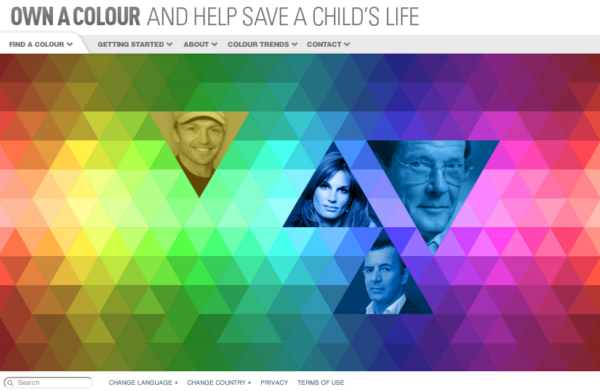
Ok, all you development people out there, here’s one to think about when you just can’t fathom picking up the phone to make one more “Help our cause” call. Own A Colour is a campaign to raise money for Unicef by naming colors in exchange for a donation. The donation for a color starts at 1£, but with 16.7 million colors available (the number that can be displayed by a contemporary computer screen) you can see how this could really add up.

Not only is the interface captivating, drawing on a tessellation motif that calls to mind the fragmented view through a kaleidoscope, but also I find the storytelling to be extremely well done. Using a mix of ordinary people and celebrities, the tiles are explained as they are named and claimed. Reading the stories, I’m reminded of this project, which also explores the interplay of color and memory, of the personal significance of a hue.

And while I know infographics are all the rage, and some of us may be getting a bit sick of them, I like this snapshot (below) as a way of navigating the color landscape. There’s something wonderful about seeing the different arrays of trending colors and random colors, and the color choices of different nationalities.

I’ve been talking a lot about generosity lately, about the idea that many things we find joyful are generous in some way, and I find this a great example because even though they’re asking for money, it still feels generous. I feel like I’m being given a world of color to explore and participate in. It makes me want to give. So let me get on that, and I hope you will too. Share a link to the colors you choose in the comments, or on Twitter!

Designing joyful cities

30 September 2011

MakeCalgary

Tonight I had the privilege of speaking at makeCalgary, a conference that looks to design for inspiration on instigating catalytic change in cities. The theme is “provoking Calgary’s next chapter,” and to that end I’ll be sharing some design principles for joyful cities, using examples from New York (which has been experiencing its own waves of inspiring change lately). I was incredibly impressed with the level of dialogue and especially the sensitivity to emotion among the crowd. Calgary is clearly primed for joyful change.

One fascinating discussion emerged around the idea of winter. A commenter observed that very few images in the presentations showed winter, of which Calgary has a hefty one. How do we create joy when the landscape forces us indoors, or at least makes it less natural to want to be outside? A fellow speaker, Rob Adams, head of urban design for the city of Melbourne offered a nice piece of advice from the Danes: “There is no bad weather. Only bad clothing.” I love this because it underscores that joy so often lives outside of the comfort zone. In North America we overwhelmingly design for comfort. But comfort is often inimical to joy because it is so cozy we become complacent and insular, rather than openminded, exploratory, and social. Better to take the advice of a commenter from Winnipeg who noted that residents of that city often skate to work on their river once it has frozen over!

Tomorrow, I’ll be helping to lead a charrette to apply some of the diverse inspirations from different cities to a site within Calgary. Looking forward to sharing back after the conference.

If you’re curious to hear more about what I’ll be sharing, here’s a link to a podcast interview I did with two of the conference’s organizers, Matt Knapik and Kate van Fraassen. Fun!

Beauty heals

22 September 2011

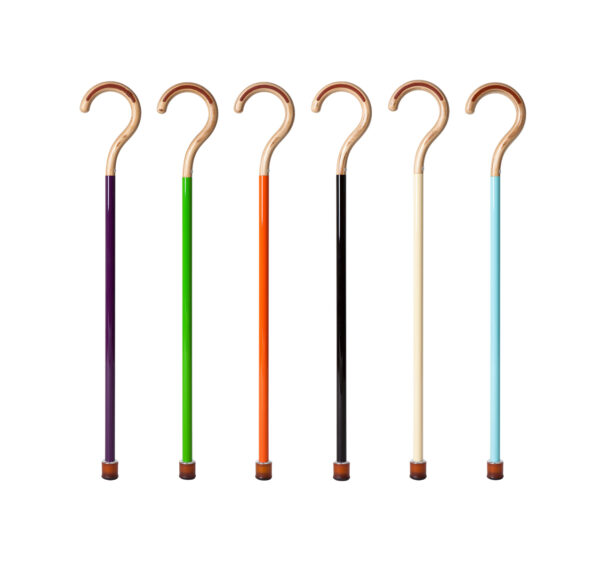
Omhu is a Danish company with a mission to support people’s changing needs throughout life with design. The name means “with great care” in Danish, and that’s evident in the selections, from elegant hot water bottles to eyeglass cases to their signature walking sticks – everything is selected to make life with impairments a little more beautiful. They write:

We started Omhu after searching in vain for well-designed products for relatives and friends who needed help with simple tasks such as walking, bathing, or reaching overhead… Omhu celebrates good design because it’s life-enhancing, and it’s fun. By creating more exciting choices of things that help, we hope we can also help change the way people feel about aging and ability. Because everyone’s getting older – even you!

They also say that “beauty heals,” which I think is an important idea. When you think about being diagnosed with a long-term illness, it’s rarely the aesthetics you think about. But suddenly being dependent on cold metal walkers, hospital beds, and other disability aids usually has a dampening effect on the mood, and I think we could improve quality of live significantly with more thoughtful consideration of the emotions in design. Imagine how unenthusiastic people would be about wearing eyeglasses if they were styled like the prosthetics they are, rather than fashion accessories. Color, texture, and form can quietly console us about our condition, as well as inspire us to take better care of ourselves.

The walking sticks, which I first wrote about in a column for Core77, are now on sale for $112 (regularly $149) at Fab, a new online flash sale site for design. The sale ends in two days, so if this is something you’re considering, don’t wait!

The joy of good food, in abundance

11 September 2011

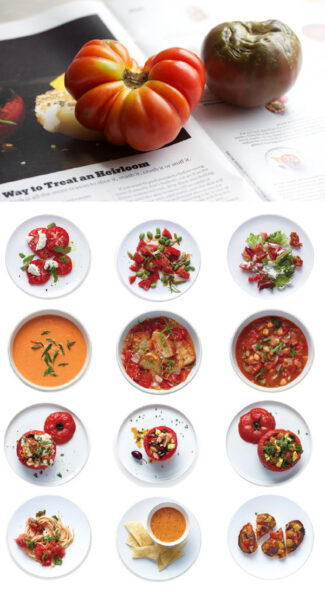
Amidst numerous disappointments for me in the redesign of the New York Times Magazine, there is one thing the new editors got very, very right, this being the presentation of Mark Bittman’s wonderful Eat column. If you’ve been exposed to Bittman through his Minimalist column, or his myriad cookbooks, you know that he stands for beautifully real food, simply prepared. He is a voice for restoring the place of cooking among the palette of basic skills possessed by all adults, and his adroitness at balancing elegance with ease in his recipes makes his body of work an important entry point for those “too busy to cook.” His philosophy of approximate measures, devotion to high quality ingredients, and embrace of the seasonal and sustainable have inspired me on more than one occasion, and so it’s a joy to see his recipes matched by visuals convey their exuberance.

Bittman’s organizing principle is theme and variation. The theme is of the moment: heirloom tomatoes, asparagus, pasta primavera, lobster. It is a carpe diem call, an urging to revel in an evanescent largess of some kind. It is rooted in abundance, a perennial theme of Aesthetics of Joy, and this is what we see brought to the forefront in the visuals. The theme unfolds in variations, typically four movements, that burst with color and possibility. It has become a weekend ritual for me to eagerly anticipate the column, tearing through the magazine to find this page, and add it to the collection on my fridge door. (It’s worth noting that it is nearly as lovely in the online version – in some ways more so, with more emphasis on the food.)

I find these arrays irresistible, and I can’t overstate what a victory I believe this is for real food. In the modern age of mass production, comestible abundance has been claimed by Big Food, by double cheeseburgers and all-you-can-eat buffets, by the Big Gulp and the Venti latte. Aesthetics of abundance are especially prominent in confectionary. It’s the “taste the rainbow” of Skittles, which overflow their boundaries in the ads, an industrial bumper crop. It’s the giddy experience Willy Wonka, vivid M&Ms, everlasting gobstobbers, and Mr. Softee with hundreds and thousands. The association between sugar and joy and abundance is primal – it derives from harvests, and our genetic predisposition to take advantage of excess while we have access to it. Waste not, want not.

But the ecstatic sugar-high has overshadowed the natural abundance available from real food, the kind that comes from a farm, not a factory. It excites me to see an aesthetic treatment that imbues real food with this feeling of plenty. After all, we eat with our eyes as much as our mouths, and for all our best intentions, there is an unconscious craving for muchness.

If there is thing I hope people take away from this blog, it’s that things are easier to change than people. And changing things often leads to changes in people. It may seem trivial, but I see the Eat column as an example of design used to outsmart our cravings, to realign our desires with the needs of our bodies in a contemporary context. I hope this is just the beginning of Aesthetics of Joy in the food revolution.

Now go make yourself some corn and blueberry crisp and savor these last days of summer!

Images: Heirloom tomatoes Yunhee Kim for The New York Times. Food stylist: Maggie Ruggiero. Prop stylist: Deborah Williams. Layout from Margaret & Joy’s gorgeous food blog. Asparagus Yunhee Kim for The New York Times. Food stylist: Maggie Ruggiero. Prop stylist: Deborah Williams. Fruit desserts Yunhee Kim for The New York Times. Food stylist: Megan Schlow. Prop stylist: Deborah Williams.