Color around every corner

29 July 2012

Color subway

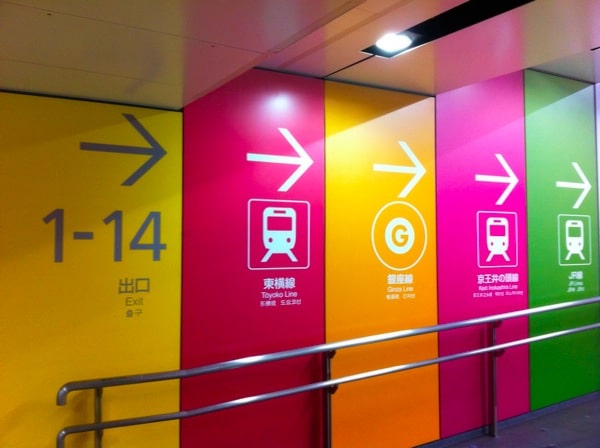
For a reserved culture, the Japanese certainly aren’t shy about color. Everywhere in Tokyo you find pops of the brightest hues, on doors and signage, traffic cones and taxicabs. The color comes in broad swathes and little bursts. Sometimes it’s functional color, telling you where to go or what to pay attention to. A big, bold color system like the one above makes an incredibly complex train system effortlessly navigable by non-Japanese speakers. At other times it’s purely joyful, a gratuitous flick of the paintbrush, a little dance of neon whose only purpose is to make you feel good.

Where along the way to becoming a civilized society did we lose color? This is the question I’ve been asking myself since the trip, as I’ve tried to understand the differences in how Americans and Japanese use color in our environment. Seriously, in the West our relationship to color is utterly dysfunctional. In office cubicles, condo complexes, subways, highways, sidewalks, malls — the contexts we spend most of our time in — the palette is a monochromatic blur of industrial taupes and dingy greys.

It would be wrong to say there’s no color in our urban landscapes. But look down a highway or in a city center and take notice: where do you see it? In the ads, of course. We damp down our rooms and streets so that the billboards can pop out, ensuring we can’t miss their consumerist banners. We are stingy with color where it could benefit the collective good; we are profligate with it when it’s a conduit to corporate gain.

In Japan, it is as if everyone understands the value of color, and adheres to a code to use it in a sensitive yet exuberant way.

Tokyo8x


Bookbar

This “book bar” at the Tsutaya Books in Daikanyama (one of the absolute don’t miss spots if you’re planning a trip to Tokyo) strikes me as a perfect example of relevant, natural color, harnessed in a delightful way.

Lamps

These to-die-for lamps in the lobby of the Claska hotel are a perfect example of thoughtful color use. It’s so Japanese to put the color on the inside, where it isn’t aggressive and where the light can bring the color alive with its soft glow. More pops of color below (a few of which couldn’t help but make their way into my suitcase): the gallery at the Impossible Project, lighting from the amazing Danish flower shop Nicolai Bergman in Aoyama, a Patricia Urquiola chair in the roof garden at the Tokyu Plaza shopping center, colorful washi tapes at Tokyu Hands, colored pencils at stationery mecca Itoya, and joy stickers from Kiddyland.

Tokyo8x6

IMG 7987

Tokyo8x3

Tokyo8x2

The taxicabs! We spent an inordinate amount of time taking pictures of taxicabs, with their vibrant colors and playful stripes, checks, and patterns. They look like giant toy cars driving around the city. I can’t complain, living in a city that paints its taxis cheery yellow, but I do think there is something about the Japanese taxi palette that is really charming.

Tokyo6x2

I saw dots everywhere in Tokyo. The joy of polka dots is probably another post entirely, but I loved seeing these various spots around the city. My absolute favorite was happening upon the red and white spotted packages of Tsumori Chisato outside the store (bottom left), ready for pickup. Can you imagine receiving one in the mail? How boring an Amazon box seems by comparison… On the bottom right is work by Koichiro Kimura, from his quirky and amazing gallery space in Aoyama.

Tokyo7x2

It was also fun to stumble upon a Tokyo installation of Damien Hirst’s dots exhibit in the new Hikarie center. I had seen them at the two Chelsea Gagosian galleries earlier this year, but seeing them in Japan, they just seemed so perfectly at home. I love how even the exhibit key (bottom left) has a charming quality to it.

Tokyo7x3

Images: mine and Erika Lee’s

Urban abundance

30 December 2010

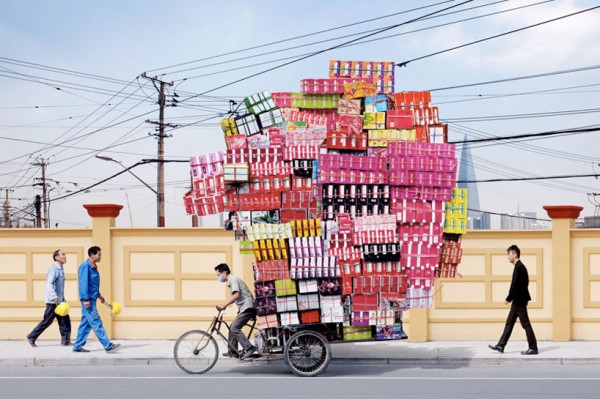
Recovering from a holiday of excess, I want to be in austerity mode, but I can’t help being drawn to the almost comical sense of abundance in these images from photographer Alain Delorme’s Totems series. If you’ve spent any time in the developing world, you’ve seen that these laden bicyclists are the normal mode of transportation for all kinds of goods, and it’s a source of great delight to see how cleverly the operators pile their wares onto such delicate craft. I know this is hard work, and I don’t mean to romanticize their labor, but having seen many of these kinds of carriers in person, I’ve been consistently surprised by their apparent lack of struggle. Despite the top-heavy proportions of their loads, their  balance seems remarkably effortless, and I find that looking at them evokes a sort of reverence for this almost magical skill.

On the DesignBoom blog, Andrea Chin writes:

The verticality of these formations echoes the incessant expansion of the urban area, constantly under construction. Here, De lorme gives a new vision full of humor and poetry of those porters – both super heroes and ants with impressive loads of tires, water containers, office chairs, flowers… Distanced from the typical photos of China portraying immense crowds, he has focused on the individuality of these workers, as opposed to all those identical and interchangeable objects.

While I can see the urban expansion metaphor and the emblematic reflection of the spread of materialism, it’s not the first place I go when I look at these images. For me, the reaction is much more emotional, and focuses more on the latter statement about the individuality and humanity of the workers. Unlike the numberless trucks that ferry goods around western cities, their facades obscuring their contents, each of these improvised structures is a unique composition, a transient artifact of human ingenuity. They’re less elegant than purpose-built cargo transports, but they have a kind of ramshackle beauty. Accidental sculptures, they remind me of the limitless nature of human assiduity, and the joy that lies in so many ordinary acts.

Alain Delorme: Totems
via: Erin Loechner’s lovely Design for Mankind

Precious potholes

2 March 2010

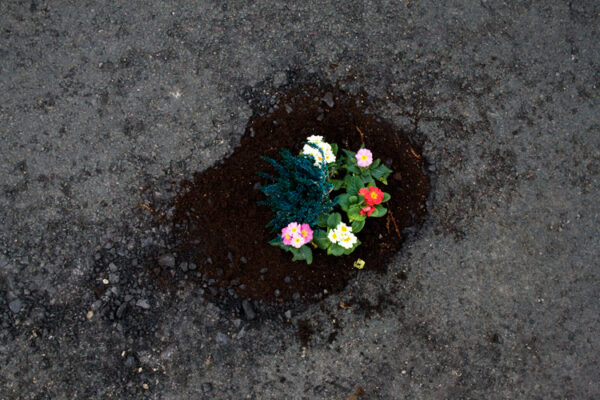
Artist Pete Dungey says of his Pothole Gardens, “If we planted one of those in every hole, it would be like a forest in the road.” Indeed. And a gorgeous, surprising example of urban renewal and joyful activism.

{via for the love of bikes}

Optimism, redux

20 November 2009

IMG_5713.JPG

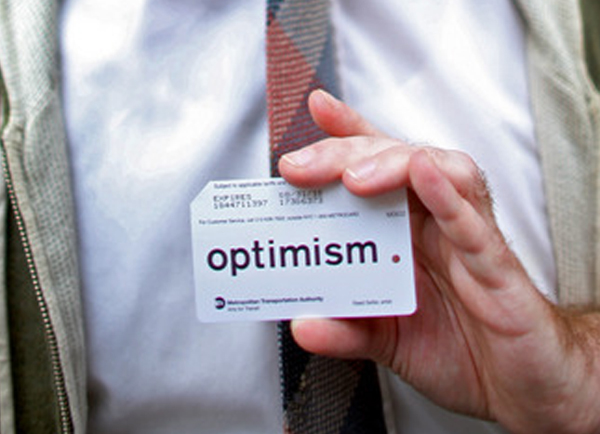
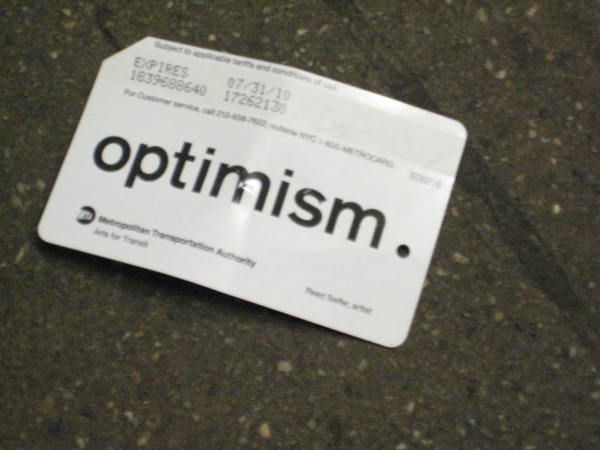
Remember these? I found one lying (improperly) discarded on a subway platform back in September and labeled it “joyful litter.” Now, the NYT explains: it’s a public art project by artist Reed Seifer.

Read more, here.

{via @swissmiss}

Joyful cycles

27 July 2009

img_0447

Vanessa has a nice post on for the love of bikes about these beautiful colored tires. The stripes on the side walls blur together when in motion to create a “speed-blend” effect. What a wonderful example of joyful design! As a rider you wouldn’t even get to see them in action, but you would get to see the delighted reactions of people around you.

Via for the love of bikes (more photos there)