







The personalities of colors

3 February 2013 by Ingrid

8047249994 9c4421fef8 h

If you like colors, I think I’m about to make your day. You’re about to meet all the personalities of the colors of the rainbow. Did you know that Fuschia’s a fussbudget and that Magenta’s a gossip? That Coral is “an absolute flip?”

Back in the 60s, a voiceover artist named Ken Nordine recorded a series of short beat poems about colors, backed by free-form jazz. The poems began as advertisements for the Fuller Paint Company, but when radio listeners began to call in requesting to hear them played again, Nordine decided to record an album of them. Once I started listening this weekend, I couldn’t stop — they’re just so delightfully odd.

Nordine spins stories like he’s letting you in on a secret. “You know how Green can be,” he says confidentially, before expounding on that color’s mercurial nature. Some stories are plot-driven, like the story of how Blue saved Yellow from being cut out of the spectrum. Others are like oddball love letters. On Lavender, with the resonant sounds of woodwinds in the background, a sultry Nordine husks: “Lady of the soft edges, tell us all. Or tell me. Where day goes with night, and what they do there.” Some colors are upbeat, like Orange, while others are slow and heavy, like Burgundy, which is depicted as a “fatly soft, softly fat” gourmand. (I laughed out loud when I heard Nordine purr, “Come, come, big Burgundy, what do you weigh?” like a sly celebrity journalist. It seems most charming when he speaks straight to the colors in direct address.)

If you spend as much time thinking about colors as I do, I think you’ll have fun with this. The tracks play like parodies, and yet there’s a soulful kind of truth to them. The music, the tone, the weight of Nordine’s voice — they’re all visceral illustrations of how colors make us feel. A dark rich color like burgundy does feel heavy. A color like coral does feel vivacious and engaging. Green is dynamic and changeable. So it’s wonderful to hear the consonance between color and attitude in these funny little tone poems. After all, the better we understand color, the more useful it will be to us in creating a more vibrant, joyful world. That, and they’re a whimsical brightener for any midweek blues — or ecrus, or olives, as the case may be.

More: Here’s the link to listen to the full album on Spotify
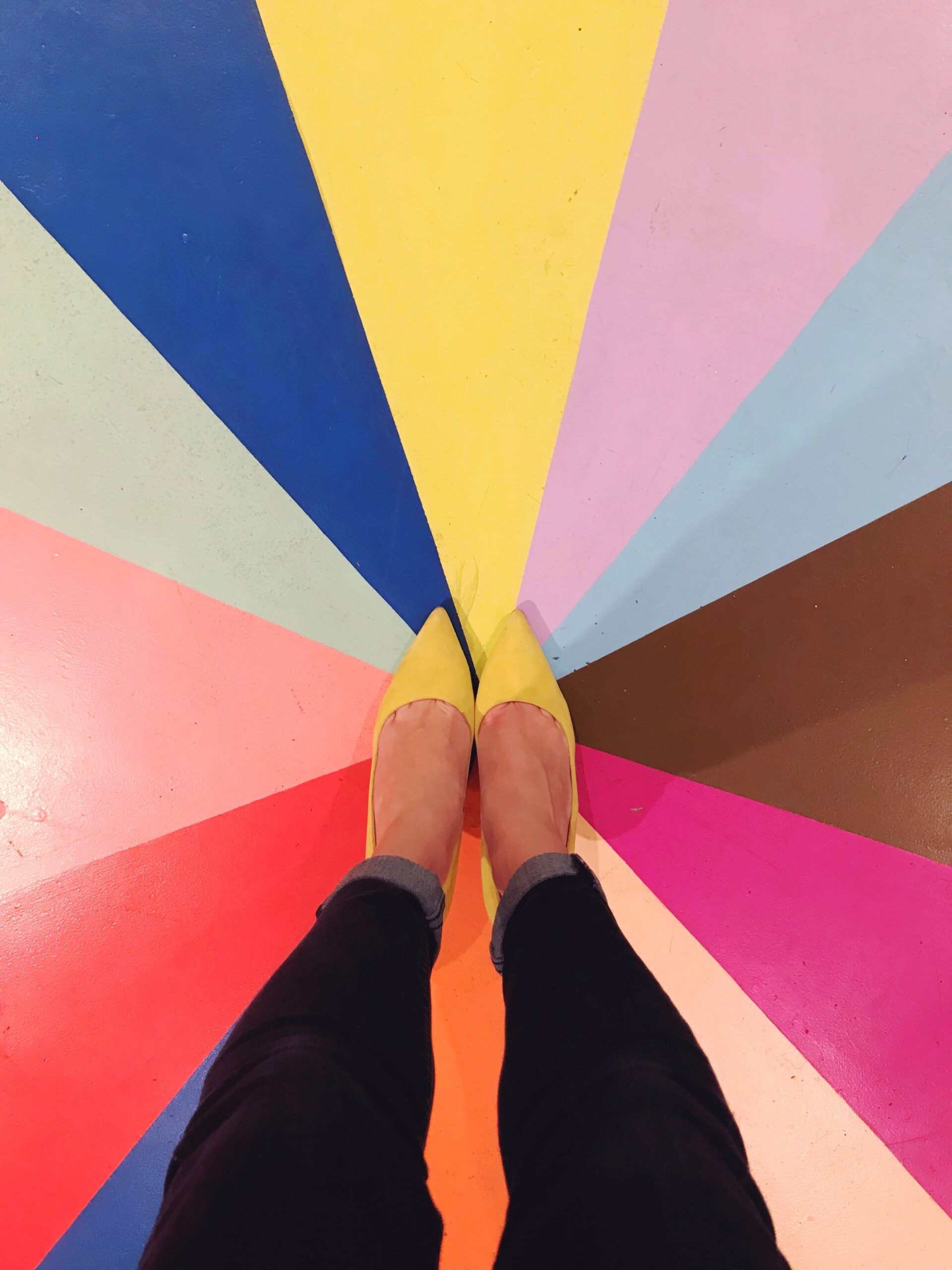
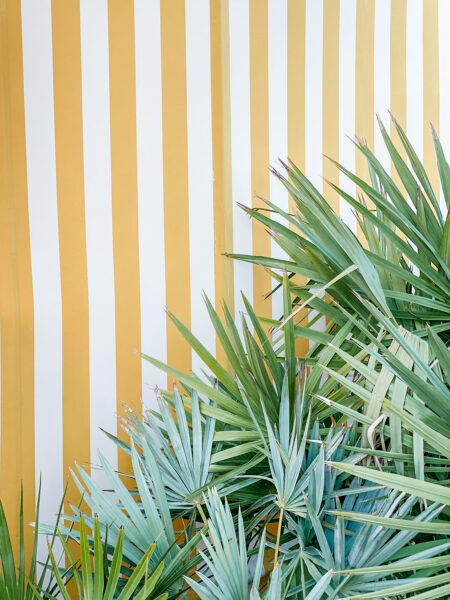
Image: I love this wall of color set free in Göteborg by Nelio

Via: @ayepea 

The joy of missing out

15 January 2013 by Ingrid

Screen Shot 2013 01 15 at 8 42 00 AM

You may never have heard the term FOMO (fear of missing out), but you’ve likely felt it. If you live in a big city like New York, it’s almost impossible not to have a pang of it once in awhile. On a Friday night, after a workweek that seemed to move through me more than with me, I’ve often succumbed to its pressure, slipped on a pair of heels, and headed out to a cocktail party or event rather than curling up in an armchair with a book. It’s not rational, which makes it harder to resist. FOMO slides into spaces of longing, the gaps between our desired lives and our real ones, and sticks there, like a fish bone you ate by accident and can’t quite seem to swallow.

Social media makes FOMO worse — for some, it may even be the root cause. No one instagrams the lame party, or posts on Facebook about the fight they’re having with their spouse, or tweets that they are ordering takeout from the same Thai place for the fifth weekend in a row. Feeds are self-edited to be glittering displays of fun, adventure, and romance. At every moment, we are missing out on something, or at least it seems that way at the time.

And it’s not just fun we fear missing. Over the last few years, as Twitter’s river of news and updates has become more rapid, I find I worry about missing an article that is relevant to my work, or some piece of inspiration that could be the vital link that brings a chapter together. It doesn’t matter that I have a folder brimming with more material than I could post in a decade. I still worry that something better might slip by right on the day I decide not to log in.

But as the new year settled in to its first days, and I went down with the epic cold that’s had everyone sneezing and hacking, I noticed something. People I talked to, and posts I read, were all talking about the same kinds of intentions for the new year: to ease up and slow down. One friend wrote about going on an inspiration diet, using the time saved by reading and browsing less to make more from the inspiration he already had. Others wrote about taking time for introspection, limiting technology, and spending more time with family and friends. It was all very in sync with what I was feeling, cuddled up and coughing on my sofa. It was the complete opposite of FOMO, something more aptly called JOMO: the joy of missing out.

I can’t take credit for the term — it was coined by writer Anil Dash after the birth of his son. He writes:

There can be, and should be, a blissful, serene enjoyment in knowing, and celebrating, that there are folks out there having the time of their life at something that you might have loved to, but are simply skipping.

By the laws of physics, you can only be in one place at a time. You’re going to miss things. The question is how you deal with it. To make deliberate choices, and to revel in the ones you’ve made — that’s what JOMO is, and what I’m embracing this year.

Joy is about presence, about being in the moment and soaking in every sensation that moment has to offer you. The fear of missing out intrudes on an experience, causing you to feel torn between different moments, and lessening your pleasure wherever you are. When you adopt an attitude of joy about missing out, you let go of other possibilities, reclaim the moment you’re in, and set yourself up to enjoy it. Often, that means choosing simple pleasures over flashy ones — the ones that feel good over the ones that look good in photos. It’s a home-cooked dinner over an eight-course tasting menu. It’s a bike ride with family over an exclusive event. It’s poems over tweets. Above all, it’s savoring what you’re doing and who you’re with, immersing yourself in the real pleasures of the experience, as opposed to the imagined ones a few miles away. It’s remembering that this moment is imperfect but completely your own, and best of all, it’s happening right now.

More: JOMO! by Anil Dash

Merry merry!

25 December 2012 by Ingrid

Why do we say “Merry Christmas” and yet so rarely use the word merry at other times of the year? I got curious and did a little research. Merry seems to have been popularized by Charles Dickens in A Christmas Carol, published in 1843, the same year as the first commercial Christmas card, which also uses the phrase. “Merry Christmas” appears as early as 1565, but doesn’t seem to have gained currency until the 1840s, when Queen Victoria popularized several of the rituals we now think of as commonplace at Christmas: decorating a tree and sending cards to family and friends. It was Prince Albert who brought the traditions from Germany, and desire to emulate the royal family spread the traditions throughout the world.

Ironically, the modern-day English usually wish each other a happy Christmas, rather than a merry one. This may be attributed to the fact that “merry” retains some connotation of drunkenness in the UK, which perhaps was lost in the more puritanical eras of US history.

But the most interesting aspect of merry’s history has nothing to do with Christmas at all. Merry is a palimpsest of a word, dating back to the most distant roots of European languages. Merry’s ancestry includes the word murgijaz, a Proto-Germanic word meaning “short-lasting,” and the Proto-Indo-European root mreghu- which simply meant “short.” It is suggested that the connection to pleasure comes from the notion of “making time fly” — that time feels short in a pleasurable state. So within merry, the ideas of enjoyment and evanescence find themselves inextricably linked. To wish someone a “Merry Christmas,” in the very old sense, is to wish them pleasure and to express a hope that they’ll savor that pleasure acutely before it passes.

All of which seems a perfect sentiment for a holiday that comes once a year. I hope you’re enjoying the time with friends and family, and send wishes for lots of joy. Merry Christmas, or Merry whatever-you-celebrate!

Image: Vintage Christmas card from 1955, available on Etsy

Secret joys: colorful socks

9 December 2012 by Ingrid

Gap animal socks

Socks are a secret way to be joyful, even (especially!) in serious situations. No one has to know that inside your shoes are rainbow stripes, or polka dots, or a pair of owls on ice-skates. Your feet are your own territory; you’re free to decorate them as you choose.

I’ve always loved colorful, patterned socks. My philosophy is, “Why not?” No one has to know they’re there, and the act of putting them on in the mornings perks me up. Taking them off at the end of the day, I smile again, remembering that they were under there, my true joyful self under all the emotions that came and went.

Joyful socks don’t have to be expensive. They shouldn’t be! They only need to be bright and comfortable. Yesterday, I fell in love with these charming pairs at the Gap. I couldn’t resist them, and they’re on sale. The fox has a stocking cap. The penguin is bundled up. The owl is headed for Rockefeller Center. Are they too cute? Probably, but that never hurt anyone. It’s a gloomy, drizzly day in Brooklyn, but I’m inside mulling cider and contemplating a winter with warm, happy feet. Wishing you the same!

Of animals and absurdity

2 December 2012 by Ingrid

98853fe03c8d11e2815722000a1fa518 7

The Instagram feed @thiswildidea has been giving me a lot of joy lately. Have you seen it? Photographer Theron Humphrey’s project Maddie on Things isn’t new, but his photos of coonhound Maddie continue to be charming and inventive, and Maddie must be the most dexterous and amenable dog I’ve seen. Maddie deadpans with the best of them, making the photos delightfully absurd.

1c528750ee2e11e1a9d822000a1e9de9 7

2500e3a0f2bc11e1b93522000a1e8aaa 7

Maddie’s success provides further evidence that we relish animals in ridiculous situations. The web is full of examples, but the phenomenon actually dates back much further, to the nineteenth century and photographer Harry Whittier Frees’s portraits of kittens in human scenarios. (And who knows, probably it’s even older than that.) Surely there’s a cuteness factor here, but I don’t think that’s the whole story. There’s something special in the way that projects like this ritualize surprise. They give us a formula which sets our expectations, but each installment disrupts them in new ways. Each photo follows a pattern, yet also pushes a boundary. It is playful and endearing and embarrassing — and we love Maddie for her game willingness to go along for the ride.

B4681ace39a511e2ac3022000a1fb72c 7

773b4f2233dd11e2bbd822000a9f15da 7

1a23f2f4380f11e2b3e122000a1f9a4f 7

Not to write cuteness off entirely, though. Cuteness is at root an aesthetic of vulnerability, and nothing is more vulnerable than the willingness to let someone put you in absurd situations. There’s sometimes a fine line between affection and humiliation, and it is a very sweet kind of companionship to be this loved and this trusting. Innocence by definition entails blind faith, and no matter how jaded we become over time, we seem to take a vicarious thrill in innocence and the way children and animals simply trust their welfare to our imperfect selves.

To be absurd, to be part of an absurd event, is also a kind of release. I think on some level we empathize with Maddie’s readiness to be part of someone else’s story, to be medium and subject, and to take on these strange challenges created for her. In any situation where we give up control and surrender to an experience (Philippe Halsman’s jump photos come to mind), we open up a new possibility to surprise ourselves. Self-surprise is one of the greatest joys, when we discover some new lightness or freedom within ourselves. Perhaps the greatest joy of participating in absurdity is permission: to be ridiculous, to be out of character, or simply to take ourselves less seriously.

Tumblr m5iv1h0CoZ1r9164to1 500

Images: ThisWildIdea
See more of Maddie, here.

Upside-down rainbows

24 November 2012 by Ingrid

JackJusticePembrokeONT art 7 25314

At the risk of becoming the all-rainbows-all-the-time blog, I had brave monotony to share one more. Though these rare formations have the familiar red-to-violet spectrum, they are technically not rainbows, but “circumzenithal arcs.” They owe their upside-down shape to light refracted by ice crystals high up in the atmosphere. Note also that the colors appear in reverse order, with violet on top and red at the bottom.

Circumzenithal arcs are about as common as rainbows, but they seem rarer; because they appear at such high altitudes, they are harder to spot. A good place to look for them is in cirrus clouds.

One more reason to look up more often: you might see the sky smiling back at you.

MichelTalbotOttawaONT art 7 25315

Via: The Weather Network, with thanks to Michael McQuay for the tip.
Images: Jack Justice and Michel Talbot.

Giving thanks

22 November 2012 by Ingrid

Thankyou1

Every year at this time, I find myself thinking about just how lucky I am to do what I do, and to have found such a wonderful community with you all. Thank you for your tips, your comments, your thoughtful contributions and suggestions, and the work you do towards making the world a more joyful place. Because of you, it is.

I hope you’re spending today with good friends and family, sharing good food, good conversation, and gratitude. Happy Thanksgiving!

Xx Ingrid

Remembering Jean

18 November 2012 by Ingrid

La me 0524 george obit

Say the name Sam Gribley and many Americans of a certain age will be instantly transported to a hollowed-out oak in a Northeastern forest, to the fictional home of a fictional boy who ventured bravely into the woods thinking anything was possible. They may tell you of how quickly they devoured My Side of the Mountain, the book that introduced Sam to the world, or how they confidently packed up a rucksack and told their parents they were “running away” in emulation. They may tell you how that book kindled in them a love for nature, or a love for writing. Or they may just nod quietly, as if appreciating some stlll-burning embers of childhood wilderness fantasies.

My Side of the Mountain was unique in that it made manifest the joy of the wild to children, for whom nature was so often tamed and sanitized. It was the brainchild of Jean Craighead George, a prolific writer and naturalist who was for many children a kind of guide to the beauty and wonder of the natural world. I was among those many children touched by Jean’s words, but I also had the privilege of knowing her personally, of being her neighbor and friend. Jean passed away earlier this year, and last Sunday I joined the (very) many who gathered to celebrate Jean and share what she meant to them at a memorial service in Chappaqua, NY. She was a formative figure in my life, and I thought you might like to know more about what it was like to grow up within the orbit of this remarkable woman. Jean embodied joy. In fact, she taught me much about it before I even knew it was what I was looking for.

I never “met” Jean, I just knew her. I lived across the street from her while I was growing up and she was a part of my life going as far back as I can remember. I would show up at her house unannounced, knocking on the screen door, in the way that Dennis the Menace dropped in on Mr. Wilson on TV. (This seems unfathomable now, doesn’t it? How impossible and quaint such a friendship seems now as kids are sequestered at home in front of devices, rather than left to wander the neighborhood, finding their own amusements.) I would arrive with some discovery, a strange plant or insect, and Jean would examine it with me, identify it, and tell me stories. She seemed to know everything. When I found a frog in the skimmer of our pool, Jean helped me set up a tank with fresh water and rocks to help it recover. When I encountered a fallen nest crowded with hatchlings, she took them in. She took note of my curiosities, and fed them. After reading My Side of the Mountain, I wanted to know if it was really true that Sam could stay alive eating only what he could find in from the forests. She soon gave me a book on foraging. This led to my decimating in short order all the fiddleheads in our front yard to sauté for dinner. (I’m not sure that counts as “foraging,” but it was delicious.)

The door to Jean’s wood-shingled house was always open to me. Invariably she was hard at work, but she was never too busy for a visit. I was never told to come back later. I was always welcomed with an exclamation — “Oh, Ingy!” — and a hug. And how I loved going to Jean’s house. Across the dirt road and up a few steps from my house was a wonderland, a world of curiosities. Jean loved to travel, and her house was full of her findings from these journeys. Inuit masks hung on the walls, a feathery blade of baleen hung over a doorway, a shark jaw sat on top of the television. A giant whale vertebra, like a stone propellor, sat on the floor by the fireplace. At the same time, Jean’s house was more than a repository of souvenirs. A lush mural on the front wall had been painted by a friend. In the foyer, a koi pond burbled a comforting background track. It was an unusual but real home, a home well-lived into. And it smelled that way too, the warm smoky air of the always-burning wood stove mingled with transported scents from faraway lands.

Jean amazed me with her adventures, traveling well into her golden years to places I hardly knew existed. She was always just back from somewhere at the edge of the map, and because of this she expanded the boundaries of what I considered my world. Jean traveled outside the realm of guidebooks. She trod the off-off-beaten path. She traveled to connect with the people in foreign lands, more often than not the native peoples who lived in kinship with the wildlife she studied and wrote about. And they embraced her because she was genuine in her desire to understand those places, the spirit that kindled their unique beauty. She listened with reverence to the songs of the wildlife, giving voice to creatures that for many people are distant and silent. She interpreted their characters for us in the hope of creating empathy that might protect them from the dangers of the encroaching modern world.

Jean’s life was so vibrant, I think, because it was all about life, the joy of all that lives and breathes and squirms and squawks around us. Jean embraced all of the messiness of the world, savoring its incongruities, its tensions. She didn’t let discomfort stand in the way of discovery. She ventured into the world’s mysteries deeply in tune with her own sense of wonder, and she cultivated that wonder in others. It was infectious. You couldn’t be in Jean’s presence and not be amazed by what fascinated her. You couldn’t read her books, especially the ones so beautifully illustrated by her collaborator Wendell Minor, and not fall in love with the landscapes she depicted. She understood that she only had one life and she was keen on using the time she had to experience, to explore, to create, and to love.

When I was discovering writing, Jean cheered and fed my passion. When I didn’t know what to write, Jean said to me,”write what you know.”* But she may as well have said, “write what you love.” It is what she did, and oh, the places it took her. At the memorial last weekend, as I listened to so many people speak of how Jean had changed them — how she had pulled them out of depression or inspired them to adventure or taught them to listen to their inner child — I thought of the words of another writer, the poet Mary Oliver:

               Tell me, what is it you plan to do
               with your one wild and precious life?

So many of us forget, in our humdrum routines, that we only have one life. We let days full of potential go by without realizing just how rare they are. But Jean didn’t, and looking back, I believe that is her most important gift to us. By living her life to its wild and precious fullest, she leaves a light for the rest of us. And I feel sure that there’s no better way to honor her memory than to do the same.

For more:
Jean’s website
NYT obituary
Jean’s books

*To any of you who aspire to write, this remains the best advice I’ve ever been given on the subject. It’s certainly what keeps me at it.


“We must risk delight”

15 November 2012 by Ingrid

Last night I went to a benefit for Red Hook, a neighborhood you may have read about in the post-Sandy news. Red Hook houses a mix of industry, art, and projects — it’s an odd convening, without subway access, but with a water taxi jetty and an IKEA. The benefit was a convening of mostly writers, some musicians, reading work of their own or others related to Red Hook or storms or resilience or hope. One of the organizers was an acquaintance of mine, the music writer  Jody Rosen, who I met in a café in Brooklyn, which proves that Brooklyn is so lousy with excellent writers that one can meet them just by sitting in cafés, though the chances are higher if one also happens to be writing.

Anyway, this is a text-only post. And I almost never do this — a post without an image — so it must be something important I want to share with you, and the demands of the day are pressing on me to get a move on, so… The poet Mary Karr closed the evening with this poem by Jack Gilbert, read in a full clear voice that brought me to the edge of tears. This is the argument for joy in a world of suffering.

A Brief for the Defense

Sorrow everywhere. Slaughter everywhere. If babies
are not starving someplace, they are starving
somewhere else. With flies in their nostrils.
But we enjoy our loves because that’s what God wants.
Otherwise the mornings before summer dawn would not
be made so fine. The Bengal tiger would not
be fashioned so miraculously well. The poor women
at the fountain are laughing together between
the suffering they have known and the awfulness
in their future, smiling and laughing while somebody
in the village is very sick. There is laughter
every day in the terrible streets of Calcutta,
and the women laugh in the cages of Bombay.
If we deny our happiness, resist satisfaction,
we lessen the importance of their deprivation.
We must risk delight. We can do without pleasure,
but not delight. Not enjoyment. We must have
the stubbornness to accept our gladness in the ruthless
furnace of this world. To make injustice the only
measure of our attention is to praise the Devil.
If the locomotive of the Lord runs us down,
we should give thanks that the end had magnitude.
We must admit that there will be music despite everything.
We stand at the prow again of a small ship
anchored late at night in the tiny port
looking over to the sleeping island: the waterfront
is three shuttered cafes and one naked light burning.
To hear the faint sound of oars in the silence as a rowboat
comes slowly out and then goes back is truly worth
all the years of sorrow that are to come.

By Jack Gilbert


Joymaker: Chris Duffy, Paperweight Magazine

12 November 2012 by Ingrid

A

Today’s Joymaker profile spotlights Chris Duffy, one of the founders of a soon-to-be-released humor magazine for the iPad called Paperweight. I was excited to hear from Chris that Aesthetics of Joy was an inspiration for the design of the magazine, and looking forward to seeing how joy manifests in the experience when it launches. I asked Chris about how he and his cofounder Brian use the iPad’s uniquely interactive environment to create joy, and to talk more broadly about the connection between joy and humor.

Why did you decide to create Paperweight?

Brian and I met performing comedy together in Boston. I’m a writer and editor and he’s a web developer. We’d both been dreaming of starting a humor magazine and when we figured out how perfectly our skills matched, we decided to go for it. Brian and I felt that there wasn’t yet a hilarious magazine that was championing beautiful design and taking advantage of the interactive capabilities of the iPad. We both had met so many unbelievably funny people who didn’t have a platform for their work. That’s why we decided to created Paperweight.

How do you want people to feel when they read Paperweight? 

Physically, we want our readers to be laughing so hard that they experience shortness of breath, muscle spasms, and difficulty communicating. Unfortunately, those are also signs of a heart attack, so we’ll settle for a wide grin and a chuckle.

What do you think is the relationship between humor and joy? 

That’s a great question. I think James Martin, a Jesuit priest who wrote Between Heaven and Mirth, a fantastic book about the role of humor in spirituality, says it best. “Finding a spirit of joy in your life may help you become a more humorous person, someone capable of seeing things from a ‘funny’ side. Seeing something from a humorous vantage point can spontaneously fill you with joy. (Imagine a friend making a funny comment about a tough situation in your life that helps you gain some needed perspective.)” 

What are some ways that you go about creating joy when designing for the iPad? 

The biggest way we try to create joy is through surprise. The reason we’re so excited about designing for tablet computers instead of print or the web is because of the interactive capabilities. We can literally make a magazine that talks back to you. We’re working on creating all sorts of interactive surprises, from a button that translates our content for dogs to a board game called “How to Survive the Work Day.”

We’ve also focused on creating a joyful aesthetic, one that I think readers of this blog will immediately recognize. We have polka dots! And colors! And clean lines! Unlike a lot of humor publications, design is really important to us. We want to make sure that the visual experience matches and enhances the quality of our content.

If you were a joke, what joke would you be? 

The great irony here is that, like most comedians, I find it really hard to tell a joke out of context. Choosing which one to become is even more difficult. I’ve always loved these two though:

Isn’t it a bit unnerving that doctors call what they do “practice”? – George Carlin

Bless me, Father, for I have sinned. I did an original sin. I poked a badger with a spoon. – Eddie Izzard

D

F

If you like what you read, you can help Chris get Paperweight off the ground by funding their Kickstarter. They have some pretty delightful rewards — check it out! 

Images (aren’t they to die for?): Excerpted from “Alphabet of Untranslatable Words,” by illustrator Fuchsia MacAree, slated to appear in the launch issue of Paperweight magazine.