Holiday joywashing

21 December 2009

If you manage to let your fast forward finger slip from the DVR remote for one second this holiday season, you’re practically guaranteed some joy. I haven’t had much time for TV lately so I’m sure I’m missing about 90% of the joy-filled ads out there, but even the few I’m getting show “joy” penetrating just about every industry.

Hyundai is offering more comfort and joy with their holiday sales. Walgreens is exhorting you to “find your joy” in one of their drugstore aisles. And Kibbles ‘n Bits is weighing in on the question of whether animals have emotions, offering to give your dog “more joy.” These are the ones I’ve managed to catch — have you seen any others?

In some cases, these are just holiday ads, one-offs that use the word joy as a proxy for keeping in tune with the season. In other cases, marketers are using the holiday timing to launch a joy-based positioning for the brand that will endure after the holiday season. It will be interesting to see which ones linger and which ones fade. My hunch is that on balance the joy-space will be a lot more cluttered come January/February than it was in September before the holiday madness started.

I don’t know what to make of this strategy, really. Branding is in large measure about differentiation. Why launch a new positioning at a time when everyone else is going to be saying exactly the same thing? I guess I’ll have to hold this critique until the new year, when we see who is holding fast to their joy taglines. In the meantime, unless you’re a scrooge, you may as well enjoy it. Joy seems to have dollar value this season, with lots of pre-Christmas sales. It doesn’t hurt to be in a good mood as you wander the aisles with the last-minute throngs!

Happy joy-finding!

Coke’s joywashing expedition

23 October 2009

lg_bubbles

On Friday I had a post up on Brandchannel about a new initiative by Coca-Cola as part of their Open Happiness campaign. Coke is sending a trio of bloggers around the world for a year to “uncover insights about what makes people happy.” This latest installment in the soft-drink joywashing trend is notable for its intensity and scope — it’s not just an ad campaign, but a constant, year-long push spread over a range of social media platforms.

I think it’s an interesting idea, but it does grate on me to see Coke portray a brand-ambassadorship as a joy-finding mission. These kids are going to be spending barely a day in each country (206 countries in 365 days), barely enough time to exhale, much less derive meaningful understanding (or “insight”) into what makes people happy. But of course this isn’t an ethnographic exploration, it’s an exercise in generating brand stories — warm fuzzy narratives where Coca-Cola is a star character, if not the hero.

More interesting than the supposed happiness insights Coke’s floggers will uncover are the spontaneous interactions outside of Coke’s intentions that will undoubtedly occur along the way — the things that cannot be planned for or factored out when traveling in such unpredictable parts of the world. I don’t think this experience will deliver earth-shaking new insights into emotion, but I think it will illuminate moments of generosity, hope, selflessness, good humor, and compassion that will surprise us. For that reason (and perhaps a little vicarious living), I’ll be watching.

Brandchannel: Coke sends bloggers on an “Open Happiness” world tour

Cutevertising: high and low

13 October 2009

united-bamboo-cat-calendar-3

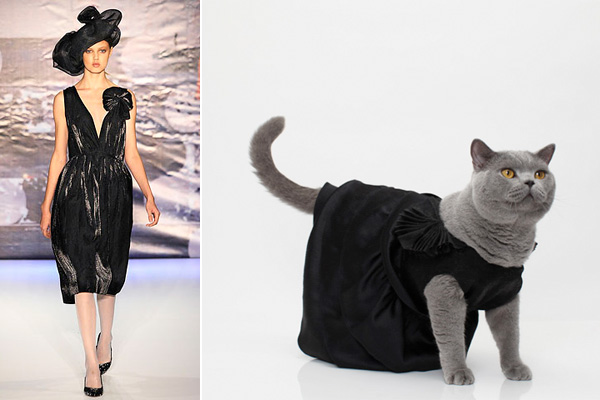
Last week I wrote about Microsoft’s new ads using a cute little girl and “happy” imagery to sell Windows 7. And now I’m seeing cuteness everywhere. Bunnies, puppies, cats in dresses — it’s all over the marketing world. It’s interesting to me that it’s both high and low, not just a mass market phenomenon. United Bamboo’s 2010 calendar, for example, features cats in miniature copies of dresses from the line’s latest collection. Given many of these dresses are retailing in the $600-800 range, it’s clear even the premium world thinks it has something to gain from cutevertising.

united-bamboo-cat-calendar-1

On the canine side of things, Modcloth, a vintage and indie fashion site, use their mascot Winston to promote their eyewear line to comic effect.

winston-modcloth-glasses-1

But not all furry things in ads are promoting expensive dresses or fancy shades. These guys just want you to make a “sweet million” with the New York Lottery:

sweet-million

I don’t know how long this trend will sustain itself, but it’s certainly fun while it lasts. What’s next? A Karl Lagerfeld kitten? Piglets selling cosmetics? Birds chirping out a car company jingle? Guinea pigs extolling the virtues of Viagra? Well, that one might in poor taste…

{United Bamboo + Modcloth examples via Refinery 29}

BMW is… joy?

1 October 2009

bmw1

Quick! Name the car you think of when I say “joy.”

…VW bug? …Mini Cooper? …BMW?

This new BMW “joy” positioning is being rolled out so softly it’s hard to tell where it’s going yet, but so far it feels like there’s a disconnect between the BMW people know and love and the BMW the brand is selling.

In “The Making of The Story of Joy” video, a behind-the-scenes look at the hero ad for the new campaign, an unidentified BMW rep is quoted as saying:

You buy goosebumps and you buy smiles and you buy adrenaline and you buy speed and you buy stories and experiences and emotion and it makes me smile even thinking about it. And that’s joy, and that’s what you get when you buy BMW, and it’s what the brand has always been about.

Really? Because I thought BMW was always about the cold metallic awesomeness of German engineering. For three decades, BMW called itself the “ultimate driving machine,” a positioning that reinforced ideas of performance, quality, speed, and luxury and kept the focus firmly on the vehicles. A quick browse of BMW’s brandtags is all that’s needed to confirm the clear understanding that rewarded such consistency of message across the company’s design and communications for all those years.

It’s unclear whether the change had an impetus or is just change for change’s sake, but evidently BMW’s brand managers felt they needed a more emotional positioning. They’ve encapsulated this idea in the new tagline “sheer driving pleasure,” which actually feels like a very appropriate evolution from “ultimate driving machine”: symmetrical to the original, with a more emotional and evocative tone that focuses on the response (pleasure) rather than the stimulus (machine).

All good so far. But from pleasure to joy is a much bigger leap, and a less credible one for this very masculine, mature brand. Pleasure is intense, sensuous, and thrilling; joy is childlike, whimsical, charming, cute, and sweet. Heart-racing pleasure makes perfect sense as emotional territory for BMW to own; the sweetness of joy feels like a force-fit.

Which is how it seems in these ads. In the “Story of Joy” ad (still Europe-only, for the moment), the voiceover describes joy as “efficient, dynamic, and unstoppable,” which makes the brand feel about as emotionally arousing as a FedEx truck. In an effort to inspire passion, the ad shows a BMW festival, a little boy surrounded by toy cars in his bedroom, and a bunch of drivers happily “joy-riding”. It does make you smile. But none of it has the humor of most VW ads, the odd charm of the old Sheet Metal Saturn ad, or the irreverent emotional punch of Mercedes nostalgia ads (like this one). BMW gets closer to joy’s quirky sensibility with the just-released “Jump for Joy” ad; but unfortunately this flies the furthest off the mark from the sleekness, aspiration, and power the brand is known for.

There’s no question that BMW is brand with enormous equity. They were probably right to pursue a more emotional tone in their marketing, but at this early stage it’s just not clear they hit upon the right emotion. In pursuit of joy, are they trading something more valuable?

Paul Smith + Evian, redux

25 September 2009

Today I have guest post up on Brandchannel about the Paul Smith + Evian collaboration. I did a short post here about this earlier in the week but hadn’t really formulated an opinion about it yet. I’ve been turning it over in my mind all week and trying to figure out exactly why I find this to be such a striking and significant partnership, despite the blasé reception it’s had from the blogs.

You can read my take over on Brandchannel, but the gist of it is that I think it represents a remarkable shift in aesthetic values for bottled water, and an interesting example of an emergent tendency towards aesthetics of joy being used in a premium context.

I also think water’s blankness makes its packaging a particularly interesting cultural barometer. Water is the ultimate commodity. Product differentiation is nearly nonexistent, so the packaging become the prominent driver of the story. Because of this, water packaging trends tell us a lot about the underlying cultural mood. That mood right now is hungry for some relief from the strictures of responsibility that come from our down economy and damaged environment. It’s not a desire to shrug off that responsibility entirely, but for moments of joy that give us a bit of release, lightheartedness, and hope.

I find the video has a twang of insincerity when Smith talks about his long history of drinking Evian. Designers do things for the money every day; I’d rather that tacit understanding than a disingenuous justification. Nonetheless, it has some beautiful words from him on the design and his inspirations. I particularly like the way he says, “My whole life is about being childlike. Not childish. Childlike.” It’s an approach that obviously really resonates with me.

Happy Friday, and have a great weekend!

Xx Ingrid

Joywashing, Canada-style

28 August 2009

joymeters

Who will win this summer’s battle for the title of Joywashiest Soft Drink?

On the one hand you have Coke, with its a ragtag assortment of musicians giddily opening happiness on a made-for-radio corporate-sponsored singalong. On the other you have Pepsi, joywashing its way into the lead in Canada with an effervescent (and slightly frightening) website determined to convince you that dancing birds and suns with sunglasses are the next best thing to mainlining the beverage straight to your forearm.

Upon arriving at the Pepsi Canada “Joy It Forward” website, you are first advised to “See the Joy” and then to “Pass it on,” with the Pepsified, Obamaesque O-replacements smiling at you like the millenial equivalent of the peace sign. It’s not hard to see the joy, being as everything is dancing at you in that toddler-on-a-sugar-high sort of way, and the word joy happens to be appear about once in every five words on the home page, slightly more frequently than on this joy-obsessed blog.

There are many appealing little gimmicks on the site. You can check joymeters that tell you, among other things, how many days are left in summer, how many mentions there are of joy on Twitter, and how many people at Pepsi Headquarters are “hugging it out.” At 9:19 last night that figure was 827,033, more than 4 times Pepsi’s entire global workforce, which prompted me to wonder when and where they do all this hugging. (I’ve worked with some Pepsi people in the past and they struck me as very normal people. I don’t remember an inordinate amount of embracing. But maybe they don’t hug consultants? Anyway, I digress.)

The site also offers a number of silly games, such as a staring contest, a bubble blaster, and a strangely addictive game where the goal is to inflate helium balloons without popping them. The liberal use of tried and true aesthetics of joy — bubbles, balloons, childhood games, etc. — brings a reflexive smile to your face. They do wear thin, but in that sense they’re very much like soda itself. Sweet, refreshing, uncomplicated. Not everything needs to be a deep, multisensory experience.

Yes, it’s over-the-top saccharine, but I give them points for execution. This is what Trident’s A Little Piece of Happy should have been, but unfortunately fell short of. The games are simplistic but well-designed (no Orisinal, but still enjoyable), the Joymeter widget interface is playable and fun, and the integration with social media is decently handled for a mainstream brand. The “Joy Now” button, found on the interactive Joymeters page, is a gem, producing a different infectious stream of laughter at each click.

joygles

A tiny but important gripe for me is the glaring TM screaming “I OWN THIS!” over the coined word JOYGLES. Aggressive TMing is anti-joy, a reminder of our me-first, legalistic society, an unwelcome reminder that this moment of pleasure isn’t brought to you by the Pepsi in the can you know and love, but by Pepsico (TM!) with its quarterly earnings and profit margins and corporate BS. Hovering over this otherwise cute nonsense word, it’s like an irritating little mosquito you just want to swat. In the 2000s, this behavior of TMing everything in sight looks a lot like a dog marking its territory — ok for a dog, but impolite verging on unseemly for the rest of us.

That gripe aside, I think it’s wonderfully self-aware joywashing, and actually is appropriately on-brand. Who has license to be this absurdly camp if not a soft drink? I much prefer this approach than a pretense to some higher meaning. Like the HFCS they sweeten the beverage with, it’s fake, sweet, and a little nauseating. But if it’s not your whole diet, what’s the harm?

If the Joywashiest Soft Drink title were a packaging competition, however, I would have to say that Coke is the clear victor, mostly for that Weber grill-inspired can (2nd from right) that is just charmingly, gorgeously summer. For me, that can says Open Happiness 1000x better than some cloyingly chipper extended pseudo-jingle.

6a00d8345250f069e20115706e7587970b-550wi

Finally, one footnote on the Coke Open Happiness campaign.

The Coca-Cola name in China was first read as “Kekoukela”, meaning “Bite the Wax Tadpole” or “Female Horse Stuffed with Wax”, depending on the dialect. Coke then researched 40,000 characters to find a phonetic equivalent “kokoukole”, translating into “Happiness in the Mouth.”

So maybe we own this whole happiness-marketing race to a lost-in-translation moment? I don’t know, and I have to say, I don’t really care. It’s still summer, for 10 more days at least, and I’m savoring the last sips of this free season and the cheery glow of its over-the-top joywashed marketing.

Joywashing: cellphone apps get together for a “joyful adventure”

18 August 2009

cellphone_joy

I don’t know if some animated characters can make reading emails and making calls into a “Joyful Adventure,” but LG Australia certainly hopes so. The website for their GM730 smartphone features games in which personified apps get together to catch flying emails and do “playful multitasking,” whatever that is.

Looking at the graphic above, it’s clear they’re trying to harness elements of joyful aesthetics: the tiny claymation cupcake village, friendly color palette, cutesy language, and glimmering phone. It’s a Childhood aesthetic, designed to trigger playfulness and nostalgia. But the whole thing is just a gloss on what’s presented as an otherwise ordinary smartphone. The characters, with charmingly original names like “Dialing,” “Contact,” and “Office,” do nothing to highlight unusual features of the phone. They’re just the standard apps, often the ones you wished worked better. Seriously, Dialing? Is that even a feature?

dialing

The TV ad takes the Childhood aesthetic a step further, with puppets whose style clearly references The Muppets and a brightly-colored set that echoes Sesame Street. Another device from Sesame Street used in the ad is the intermingling of puppets and people. It all combines into an aesthetic designed to stimulate our nostalgia and bring a halo of joy to the phone. The ad ends with the line “Joy. Now in a smartphone.” spoken by a V.O. with a laugh in her voice and spelled out in a friendly, rounded typeface. lg_joy

But despite the frenzy of action in the ad, nothing suggests this is any different than any other smartphone. Why will this phone, in particular, make me so happy? Answer the question, and it’s a legitimate claim. But until the emotional claim is backed up with benefits, this represents another great example of the increasingly common, increasingly global advertising phenomenon of joywashing.

Thanks Ben, for the great tip.

Joywashing on NHPR’s Word of Mouth

14 July 2009

pepsi_billboards

Today I was interviewed about “joywashing” by Virginia Prescott live on New Hampshire Public Radio’s Word of Mouth, a show about trends and culture. The interview was great fun — I love talking about joy in its many forms, and especially its rise in popular culture.

You can hear the segment online here after 3pm today. And here are links to the ads from French’s, VW, Clorox, Trident, and BMW discussed.

Previous joywashing posts on this blog include one on Clorox and one on Trident, in case anyone’s looking for a more in-depth discussion of the phenomenon.

One point I didn’t have time to make in the interview that I want to add. . . Unlike greenwashing, joywashing doesn’t present a dangerous threat. I meant what I said when I indicated that an abundance of joy in marketing probably is a good thing, and certainly won’t hurt anyone. But that doesn’t mean it’s right for every brand. Not all products should be marketed as joyful products. And this glut of good vibes will definitely make it harder for any one brand to stand out.

Marketers run a very real danger of poisoning the well by jumping on the joy-wagon without backing up their advertising claims with product design or service gestures. Like any major cultural shift, the rising tide of optimism has the potential to be an opportunity or a threat. For those marketers that realize people are looking not just for sugar-coated messages but for uplifting products and services and experiences throughout their lives, the joy wave presents a good opportunity to leave a deep and powerful impression on their customers. Or it could be a fast-track to being perceived as inauthentic. It’s all in what you make of it.

Thank you to NHPR and Word of Mouth for inviting me on to share these thoughts with their listeners. Have a joyful afternoon!

Joywashing? Or joy of washing?

11 July 2009

clorox_cleanup1

My post describing the phenomenon that I call “joywashing” has provoked some interesting discussion online and off. In the meantime, examples keep coming. This morning while catching up a couple reruns of Top Chef Masters, I was struck by this new ad from Clorox Cleanup. The voiceover goes:

When everything’s just the way you want it. When it’s so clean there’s nothing left to think about and nothing left to do. That’s joy. The pure joy of the pure clean that comes with Clorox Bleach.

Then the tagline: pure joy. pure clean.

If cleaning had an emotional territory in the past, it was zen. Cleaning was about calming the storm, taming the flow of mess, getting things under control. The clean home at the end of an ad was a picture of stillness — just Mom and her well-deserved cup of tea, with even the dog neatly groomed and obediently seated. When the economy was good and we worked too hard, the emotional quality of home we aspired to was relaxation and zen-like tranquility. Home was a refuge against the busyness of the outside world. Now, in the days of pink slips and furloughs, all that peace and quiet feels isolating and, honestly, a little scary. Home now needs to be a place of vibrant energy to counter the gloom that surrounds us. The cultural significance of “home” has shifted, and smart marketers will realize that this requires a different kind of emotional content to sell products for this space.

I actually like the ad and I think the territory is a credible space for a cleaning brand to play. Clorox is perhaps a little harsh and I think it would more appropriate to their green cleaning brand or another, gentler sort of product. But there is kind of a joy to the moment they’re describing, when all the work is done and the house is really, truly clean. They’ve backed it up with joyful aesthetics: pops of color that stand out in the white rooms, high energy movements, that well-placed giant bubble, and music that has a soaring quality that matches the tone.

The language may be a little strong. I think that “pure joy” might be an overpromise and it’s risky given the joywashing trend to be so reliant on words like “joy,” “happy,” etc. The reality is that when words like this are so overused in a given time period they become very fluid. We think we know what these words mean because they are so fundamental to our language, but when they are claimed and associated with many different products and experiences in such a short timeframe, their meanings are volatile and susceptible to shift. The word “green” is the best recent example of this.

So, is Clorox’s joy-of-washing positioning joywashing? Perhaps, but my instinct says it will do ok for them. It may require some nimble thinking to maintain differentiation once the rest of the competitive space latches on to the idea. Product or packaging innovation to support the promise would help, because while the aesthetics of a clean home are consistent with joy, the acrid tang of bleach is decidedly not. I don’t know that they can do anything about that (bleach is bleach), but perhaps new scents or gentler formulations could provide sensory support for the joy positioning. It will be interesting to watch how the home space, and especially cleaning brands, evolve in this new emotional context.

“A little piece of happy” – Trident tries to get in on the joy wave

2 July 2009

trident

There’s a joy wave afoot, and every marketer from here to Timbuktu is trying to get in on the action. We get it. We’re in the midst of the Great Recession, people are gloomy, and if you’re going to flog more sportscars or soda or chiclets right now pretty much the only way to do it is to sweep us off our feet in a haze of good cheer. But all cheery marketing campaigns are not created equal.

“A little piece of happy” should be joyful. After all, that’s one way to define what joy is: little pieces of happiness. But this campaign isn’t joyful. Some of the items are entertaining, like the happy news feed and the Pandora playlist. Others are just dumb, like the pic of the chihuahua wearing goggles or the image of the two starfish holding hands (the caption reads “star crossed lovers” — har har). But my real problem with it is that it just seems like a novelty, a gimmick — all talk, no real emotion. Just because it’s timed to the recession with a peppy vibe doesn’t make it a winner. Would you visit this site more than once or twice? Would you post it on your facebook page or send it to half your address book? Do you now suddenly feel a rush of delight every time you chew a piece of the same old Trident?

I think this campaign is joywashing — the shameless use of happiness or joy to convince us to buy more stuff. Real joy is deep, repeatable, and contagious. And unless there’s something special in the formula, it doesn’t come from a stick of gum.