Ice cream for Africa

9 October 2011

110426 RW Inzozi 40

When a country has suffered a devastating genocide and come out the other side to rebuild, the last thing you expect someone to say is, “They could really use some ice cream!” But it’s exactly what Rwandan playwright Kiki Gakire was thinking when she asked Brooklyn ice cream makers Blue Marble to partner with her in opening the first-ever ice cream shop in her recovering country. The shop is profiled in this season’s issue of Edible Brooklyn, and, in addition to filling my eyes with tears, it reminded me that the need for joy is sometimes counterintuitive.

We tend to believe that people who have suffered and are suffering – those who are hungry or destitute or illiterate or injured– must have only rational needs. We see them struggling in the lower tiers of Maslow’s pyramid and we believe that our only way to help them is to address their physical circumstances. With all our best intentions, we build hospitals and schools, wells and roads. And while these are critical applications of our generosity, and we could redouble these efforts many times over and still not meet the need, some very real and valid emotional needs are pushed to the background. As Blue Marble co-founder Alexis Miesen recalls Gakire saying, “There’s no room to dream when survival is the only goal. You can’t just rebuild roads; you have to repair people, and show that life is good.”

Marie rose and jess

After all, survival is not living. And what “superficial” joyful moments (such as those spent catching cold drips off a cone with sprinkles) do for us is give us a model for what living looks and feels like. It restores our will to strive, when we know what we’re striving for. I was first made aware of this in the preface to Virginia Postrel’s The Substance of Style, where she discusses men’s rush to shave, women’s application of nail polish, and the reopening of beauty salons in war-torn Afghanistan after the fall of the Taliban government. She writes, “Liberation is supposed to be about grave matters: elections, education, a free press. But Afghans acted as though superficial things were just as important.”

Reflecting on this, and the Rwandan ice cream shop, I find my hackles raised at the arrogance of judging such desires and efforts frivolous. In a nation whose founding documents enshrine the pursuit of happiness as a right, how can we dismiss this same pursuit in others as wasteful? It’s unreasonable to expect that people wait until basic needs are met to create joy. It’s not how we are built –and with good reason.

These words of Gakire, quoted from the Blue Marble Dreams website leave me ever more convinced that the pursuit of joy in design is vital. These words will stay with me a long time.

Because we struggle most of the time, we find ourselves aggressive against happiness, love, joy, life. When we have children, we teach them that happiness doesn’t exist; that there is no pure love and as legacy, we give them our despair, our debts, our doubts, our tears, our failures… Rwandan women… want to reshape life in its simple and sweetest form. We want to share moments that are not embossed by despair and death… We want to create a space where poverty, disease, illiteracy… are not obstacles to happiness and barriers between human beings… We have to, for the sake of the health of our soul. The ice cream will have the power to reconcile people with life by providing privileged moments when life reminds them that it is also sweet.

You can read more about the shop here, and support Blue Marble Dreams here.

{via Edible Brooklyn}

Joyspotting: 33rd and Lex

15 February 2010

Spotted this installation near the corner of 33rd and Lex a few weeks ago. Despite the bitter cold, people kept stopping to play. Does anyone know whose work this is?

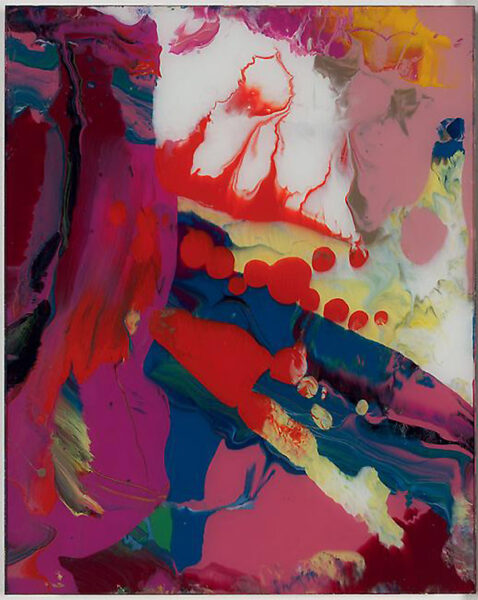
Gerhard Richter’s abstraction

8 January 2010

gerhard_richter9b5cb679

These abstract paintings by Gerhard Richter make my heart sing. They seem of a piece with these paint-over-photo works I posted back in October. I think I could stare at the one above for hours just finding stories in these swirls.

On view at the Marian Goodman gallery in New York until tomorrow.

{via Artkrush}

It’s an arty weekend for me, catching up on all the things I missed in late 2009. Today, the Bauhaus at MoMA; tomorrow Georgia O’Keefe at Whitney. I’ll have thoughts early next week. Happy weekend!

gerhard_richter6dc931c5

gerhard_richter2ed29e8d1

gerhard_richterbde24fb0

gerhard_richterb747ee47

Joyful scavenging: the real good experiment

6 January 2010

When I read about Blu Dot’s Real Good Experiment on the Dwell blog, I was intrigued but skeptical. The premise sounded novel — leave 8 25 chairs on the streets of New York City and track them to see what happens — but the whole thing could get seriously gimmicky. With all the unconventional marketing strategies that have popped up in the last few years, there’s a shadow vocabulary emerging to describe the many thinly described efforts at self-promotion. Documentary film is usually code for “long-form ad.” Blog is often a chatty version of a press release. And experiment is typically some kind of product placement via sponsored flash mob. Call me jaded if you will. But a lot of these things are long on self-congratulation and short on sincerity.

So of course I groaned when the video opened with the question “What is good? What is goodness?” in a precisely articulated upper-class British voiceover. I don’t know, but I’m sure, you, lady, are going to tell me, and I bet I can buy it for just $129. So I was pleasantly surprised by the cut to the chair on the back of a motorbike, and by the direction the film took from there. Overall, there’s a high ratio of entertainment value to sales pitch in Blu Dot’s Real Good Experiment video. There is so much whimsy here in the placing and tracking of the chairs, and especially in the delicious subversion of market research language (PUNCOs and INCOs). The categories themselves are actually quite joyful, terminology aside, because they are inclusive. For the purposes of the experiment, Blu Dot segments the world into Potential Unidentified New Chair Owners (PUNCOs) and Identified New Chair Owners (INCOs) and there’s a wonderful universality in this view. No one is ruled out as a potential customer, as the post-hoc interviews make clear. There is no microtargeting, no psychographic profiling, no questionably ethical manipulative strategy. Just chairs and bottoms that go in chairs, all the same and yet all completely individual.

Of course, there’s also joy in the surprise, and with this Blu Dot cleverly tapped into a native ritual in the New York rhythm of life: streetside scavenging. New Yorkers are used to seeing all kinds of things on the streets, but a new designer chair is still a delightful rarity, an implausibility.

I also find joyful all the talk of value in the video — how one man never likes to see a usable thing thrown out, or how another is already talking about giving the chair to his son when he no longer needs it. Joy is recurring, and this streetside recycling we engage in is a way to renew joy, taking one person’s used up experience and turning it into a starting point for another.

Finally… don’t you think it’s refreshing to see good design in real people’s homes? It’s a pet peeve of mine that design is always photographed in such overstyled environments. Of course your chair looks good in a white room with a Saarinen table and three perfect peonies next to it. What wouldn’t look good there? It was an act of courage on the part of Blu Dot, and great faith in the design, to release it into the mismatched, messy, well-loved homes of strangers. It doesn’t happen to be my particular favorite chair, but you can’t deny that the chair comes out looking good — crisp, vibrant, and versatile — in the wide range of homes in the video.

Correction: I’m sorry, I believe it’s actually 25 chairs. I wonder if they all found an INCO..?

Fela!

24 November 2009

queen8

Yesterday “Stripes!” and today “Fela!”  This might be the week of exclamation point titles. They’re the most joyful punctuation, and with all the work and so little sleep, I’m getting a little punchy. Perhaps tomorrow I’ll write about those bushmen whose name has the ! at the beginning, the !Kung, and then finish the week out with some Lichtenstein paintings!

Please, don’t mind me. Sleep deprivation makes me giddy. (!)

But back to the order of the day, which is a short note about Fela! the musical, a biopic about the legendary founder of the Afrobeat genre of music Fela Kuti, which has just moved to the Eugene O’Neill from Off-Broadway. My friend Maggie scored free tickets to the Saturday night preview show and I just could not stay at home with the laptop with that on offer. It would not have been the joyful thing to do.

I arrived flustered and let’s just be honest, more than a little cranky. I left light as a feather. What happened in between? Music, of course — Fela’s soul-stirring, body-shaking sounds, brought to life by Antibalas, a Brooklyn Afrobeat band, charismatic lead Sahr Ngaujah and the sensational Lillias White. Dancing — not just by men who seem born in motion and women whose bodies seem to be all hips and no spine, but by you too, every last gangly uncoordinated one of you. And the color and energy of costumes that are positively kinetic in their vibrancy.

I couldn’t help but dig up a little history. This video shows Fela in concert — his songs were known to run 20 minutes or longer — so you can get a feel for the music and the joyous performance style if you aren’t familiar with it.

On the revolutionary music blog Revolucion, No you can find lots more about Kuti’s music, as well as these great images of his “queens,” the women who were his dancers and also his wives. These really give you a sense of the gorgeous energy that inspired Marina Draghici’s wonderful costumes and sets.

queen3

queen1

queen18

The translation from history to real life is so vivid, so immersive, that you can’t help but feel that you’re in a completely different world for a few hours. You’re certainly a long way from Broadway!

Read the NYT review: Making Music Mightier Than the Sword
See images of the sets and costumes from the show
Get tickets here

Visible storage

12 October 2009

met_roof_sunset

Indian summer is the gift that keeps on giving in New York this year. Perhaps to make up for the drizzly summer, we keep getting these gorgeous sunny, mild weekend days. This Saturday I walked through the park and met my friend Emily on the steps of the Met. We set out in search of the Vermeers, which are quietly luminous and very worth the trip. But we soon discovered what felt like the real find of the visit: visible storage.

I’ve been going to the Met for a long time, since I was a child, but I was surprised and delighted to find this wonderful set of displays. It feels like you’re getting a behind-the-scenes tour, with all the paintings and artifacts crammed in together in row after row of glass partitions. The closeness of everything forces new connections, new relationships between items. Without the artful arranging, you’re free to see things in a new way. It feels a little like a treasure hunt, and was easily the most exciting part of the visit.

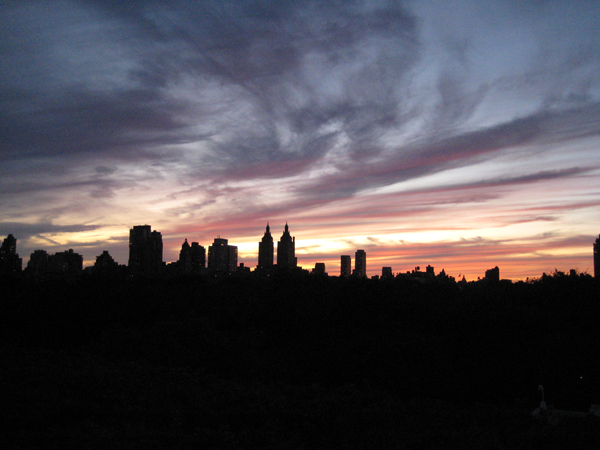
The roof is still open for drinks, and we arrived just in time for the spectacular sunset above. It’s always hard to believe when the blue sky turns pink and purple, and the art took a back seat for a moment as everyone turned towards the city and watched the beautiful spectacle unfold.

visible_storage

visible_storage2

Sunset image, mine. Met images, pazzia.

Joyful weekend: schmancy ice cream carts

4 September 2009

icecream

My best friend is in town from London this weekend, and we have a whole day to ourselves and a whole city to explore. I’m pretty sure ice cream will be on the agenda.

I’ve known Annie longer than I’ve known ice cream, even. We’ve been best friends since we met in nursery school, at the age of two. Once we got driver’s licenses we would regularly bounce between Ben & Jerry’s and Friendly’s, thanking our metabolisms all the way. At Friendly’s we had standard orders: a peanut butter cup sundae for me, a mint chip sundae with butterscotch sauce and gummy bears for Anne. (Which I still think is gross.) Last time she came to town we had a wild goose chase across Manhattan looking for a mythical Friendly’s (save yourself some time, Manhattanites — there isn’t one). It’s one thing we can count on in our ever-changing lives; we will both always be up for a cone, anytime, anywhere.

So this NYT review of the city’s gourmet ice cream carts is perfectly timed. I think 87 flavors is a bit excessive even for us, so it’s nice to be able to cut to the chase. I’d say that Cookshop’s strawberry would go perfectly with a visit to the High Line…

Happy long weekend — enjoy the last taste of summer!

NYT: 87 Scoops Later, A Sweet Meltdown

What happens when your aesthetic of joy is another’s eyesore?

13 August 2009

moran8-15-2The headlines have been comical. “Richard Perry in the Sky With Diamonds,” reads one. “Jeff Koons’s Blinding Bling,” blares another, calling out the controversy over hedge fund founder Richard Perry’s installation of a giant green diamond-shaped sculpture by Koons on the terrace of his penthouse apartment.

Art is a terribly subjective thing, which is how you get debates such as this one, which has led to myriad complaints and has even forced Perry to shift the direction of the sculpture to prevent light reflections from its mirror-polished surface from “burning like lasers” in a neighboring penthouse. (Ah, the problems of the very rich!)

You could argue an aesthetic of joy here — the oversized scale, the delicious shininess — though perhaps it’s not so layered as joy and may be more novelty than joy. My friend Deirdre says it makes her happy, though she can see how the neighbors might not be so thrilled. When private taste impinges on public eyeballs, the line between joyful and hideous can get awfully blurry. Is a work of art or a piece of decor still joyful if it bothers some to the point of agitation?

2009_7_1sps2

The joy of outdoor art

24 July 2009

29096173

Today’s NYT has an interesting article by Ken Johnson on outdoor art, suggesting that there has been a thematic shift from grand, ideological monuments to works that are designed simply to “divert, amuse, and comfort.” But is there really anything wrong with that?

Johnson writes:

The big problem for outdoor art is the absence of any consensus of values in our pluralistic, multicultural society. It’s hard to imagine a public sculpture of a hero today that would not be regarded by one faction or another as partisan. As an unscientific sampling of art in the public realm this summer confirms, contemporary outdoor art tends to offer unobjectionable, mildly decorative or entertaining and relatively empty experiences.

To me, this conflates two separate questions into one murky discussion. First, what is public art for? And second, is the art any good?

The first is a theoretical question about why we make and commission art and what we seek in the experience of art that inhabits public spaces. It opens the door to a worthwhile examination of cultural values and Johnson’s comparison of Saint-Gaudens’s Sherman monument with the adjacent colorful Franz West sculpture illustrates his point nicely. No doubt there’s been a values shift, but I wonder if it’s not so much the fact that multiplicity makes it hard to commemorate our heroes, but that outdoor art no longer is the primary way in which we achieve this end. Think of the Shepard Fairey Obama poster and you’ll know what I mean. In the olden days, people gathered in public squares, and statues were a way of keeping an image in the public consciousness. Now, people still gather in squares, but mostly for recreation; they do the bulk of their thinking and communicating and even rallying online, and images that stick in the public mind now are frequently discovered and recirculated there.

I’m not saying that a million YouTube hits has the commemorative value of a bronze monument; my point is rather to suggest that the way we use public space is mostly geared towards leisure, so it makes sense to me that enjoyment would be a driving factor in selecting work for this realm. When you leave your office building for your 10-minute “lunch hour,” what would you rather see: a fearsome general in smiting posture, or a bunch of children playing hide and seek around a colorful set of forms? Perhaps this is selfishness, to prefer to have art that brings us enjoyment over art that honors the sacrifices of others. But perhaps it’s just human.

Joy has an important place in urban outdoor art because our limited open space is vital to our mental and emotional wellbeing. I don’t think it’s always a conscious criterion of those that commission such works, but certainly many artists derive pleasure from creating works that inspire nothing more cerebral than delight. And yet, delightful can also be meaningful. There’s no law that says that only somber works have intellectual value. (If there were you might have to banish the Impressionist wing of the Met from school field trips.) Joy is a constant human craving, and much of the artistic experience is to celebrate and revel in this.

Agree or not that joyful art has an important role in the world of public sculpture, the question of quality is still a separate issue. Johnson’s veiled derision suggests he does not think many of these works are very good. Commenting on the Afterparty installation by MOS in the courtyard at PS1, Johnson writes with tepid enthusiasm, “it nicely exemplifies the inoffensive spirit of public art today.”

But inoffensive is not in and of itself bad. Not all art has to provoke, particularly in public spaces which are primarily for enjoyment. This does not forgive weak execution, but suggests artists and curators do better to make the reality as joyful as the intent.

NYT: “Well-Behaved Street Corner Sculpture”

PS: I have to add that I intensely dislike that installation at PS1. I know it’s trying to be all Bedouin-tent-y, but I find it kind of dank and Hobbit-like and totally in keeping with the cranky weather of this summer. It may be inoffensive to my dignity but it affronts my senses. I’m sorry, I like you PS1 but I don’t like that.

The joy of missed connections

23 July 2009

32809

I’m not sure why I find Sophie Blackall’s illustrations of Missed Connections so joyful. There is something bittersweet about these missives, written with the knowledge that recapturing such an evanescent bond is deeply unlikely. And yet, there is joy in the moment of connection, the feeling of some tiny but important event between two people. It occurred,(something anyway), it can’t be undone, and maybe, just maybe, it could change both lives forever.

The moment becomes aesthetic when we look at the charming, quirky details people remember about each other. The noisy tambourine and green skirt, the blue hat, the hula hoop, the fear of birds. The aesthetics of missed connections are a study in that which stands out from the rest of the gray city, things which disrupt our attention, make us look and, more often than not, give us a sense of joy that sticks in our memory, at least for the short-term.

For me, the greatest joy lies in the naked hope people display in these postings, believing that the world is full of gifts that come at unlikely moments, and that there’s no shame in believing they’re meant for you. City life is full of guarded, careful interactions. Missed Connections are an oasis of vulnerable openness and optimism, and even if their subjects never reconnect, I love that someone is bringing them to life.

Caught green-handed!

23 July 2009

green_herald_square

The city has caught the polka-dot bug, and it’s spreading like wildfire. I was pleasantly surprised to see a new crop of green dots in Herald Square, so new they were still surrounded by yellow caution tape. As I was poking around, I caught sight of a truck being loaded up with big green paint sprayers. I interrogated the gentleman in the photo below (who, despite the surly expression, was actually quite amiable) and he confirmed my suspicion that he and his companion are in fact the New York City green polka-dot painters!

Now that I had so serendipitously come face-to-face with these agents of aesthetic good cheer, I couldn’t let them go without another question. “Why are you out here doing this?”

The duo’s answer was satisfyingly, joyfully simple: “Why not?” And really, why not? I couldn’t think of one good reason.

green_dot_painter

Joyful weekend: celebrate Bastille Day early

10 July 2009

bastille_day

If you happen to be in Brooklyn or a subway ride away, add some joy to your weekend by celebrating Bastille Day two days early this Sunday on Smith St. As usual, the street will be covered with sand for the world’s largest petanque tournament, and the rosé and Ricard will be flowing.

I’m tempted to wax poetic about the various joyous elements of this event (celebration! freedom! the wonderful weirdness of sand between your toes in the middle of downtown Brooklyn!) but it’s 5:30 on a Friday so I’ll refrain. The event runs from 2pm-10pm, near Bar Tabac off the Bergen St. F stop.

Happy weekend, and hope to see you there!

Upcycle a dumpster into a swimming pool!

10 July 2009

shippingcontainerpools132

This joyful Friday continues with this wonderful item from Inhabitat on DIY pools made from recycled dumpsters. You would never know that those glorious sparkling blue boxes used to hold demo’d drywall and rebars. I wonder if I can convince Lila and BD to put one of these in the garden downstairs. Maybe if it were circular

Via Inhabitat

The joy of views from above, redux

25 June 2009

high10A few weeks ago I wrote about the joy of seeing the world from above. Today, I discovered more evidence that I’m certainly not alone in that penchant: the “From the Airplane Window” pool on Flickr, 1421 members strong.

But views from above need not be so high to be transcendent, to momentarily transport you out of the reverie of your usual way of looking at the world. The High Line park, recently opened on the West Side of Manhattan, accomplishes no less of a shift in perspective, though only about 30 ft above the ground. Being up on the High Line shows how little a distance is necessary to give you a new view on things. It allows you to experience the city, which is normally so enveloping, as a semi-detached observer.

This is particularly true at the amphitheater, which creates an ironic kind of street theater looking up 10th Ave., reminding us of the spectacle that is New York City, and that however blasé we may become about living here, New Yorkers are part of a metropolis that inspires interest and curiosity in much of the world.

There is something about this middle distance view from the High Line — above the city, yet still very much in the city — that makes the shift in perspective all the more powerful. In a plane the landscape has a surreal quality, but from the High Line the city is both transformed and yet still very real. The people are not ants moving away from you at a rate so quick you can’t hold onto them; they are still people, but from that bird-on-a-wire view they are placed in context. They are also removed from time, in a way, where you see their movements circumscribed on the earth and the streets seem filled with patterns.

I love this quote, by Lisa Switkin, a landscape architect involved in the design of the High Line:

Someone said to me ‘have you noticed that people have a different pace when they are on the High Line?’ This made me smile, as I remember the supportive but skeptical reaction when we first stated our basic mantra of ‘Keep it Simple, Keep it Wild, Keep it Slow, and Keep it Quiet’ that inspired the design. ‘Can you even do that in New York?’ was a common response. And yet, it’s true; people do have a slower pace and sense of delay when they are on the line. They are suspended in a unique urban condition – both a part of the City and removed from the City at the same time. I hope the magical sense of surprise and bewilderment that the site produces itself, along with the legible and deliberate elongated transitions embedded into the design – from streetside to topside, hard to soft, woodland to grassland, river to city – give people the opportunity to see the City in new and unexpected ways; the familiar and iconic side as well as the up close, textural, and backside of New York City.

The design of the High Line is so wonderfully sensitive that it provides aesthetic opportunities for joy in many more ways than just this transcendent shift in perspective. As Switkin notes, the site does evoke a “magical sense of surprise and bewilderment,” from the charmingly aggressive way it cuts through buildings to the odd twists and turns to the landscaping which feels even wilder and more native than the local woods in our nearby suburbs.The High Line feels absurd, spontaneous, and vibrant, all joyful qualities.

The proof of joy in any design is in the way in makes people feel and behave, and in this, the High Line demonstrates its positive emotional worth. The High Line blog notes a “renegade cabaret” that has sprung up on a balcony neighboring the line, an entertaining phenomenon made possible by the almost-uncomfortable adjacency of the park to the surrounding buildings. It also talks about the first marriage proposal on the line. These are the true markers of joy in a space, joy that will endure past the initial exhilaration of its newness. Does a space make people want to break into song? Do people see it as a place they want to start their lives together? Do people behave in unexpected ways, ways that may surprise even themselves? Are people smiling, not from the thrill of discovery, but in the sheer pleasure of being there?

If so, then you might say you’ve designed a joyful space.