Joyful packaging: Bermellón

3 August 2012

Anagrama bermellon 01

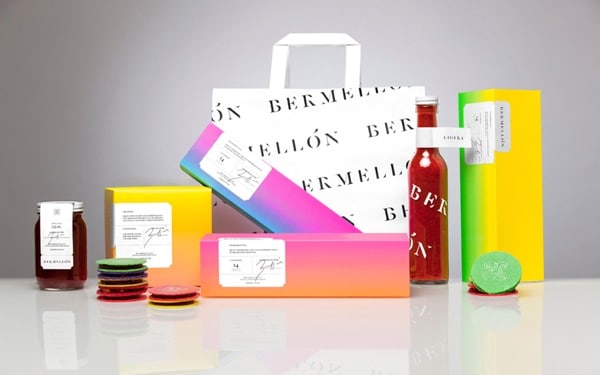
I love the rich, bright gradients on these packages from Bermellón, a Mexican confectionary shop. (Not to mention the bright colors of the sweets themselves.) The colors are as functional as they are eye-catching, reflecting the intense spicy and sour flavors with which Bermellón infuses its sweets.

In this way, the packaging essentially replicates the vibrant skins of fruits, which advertise their sweet, flavorful contents. Research suggests our color vision evolved to find those ripe fruits, so it’s no surprise we feel delight when our food comes wrapped in bright colors. More than just a pretty wrapper, these boxes tap into some of the most primal associations we have with nourishment: they feed the eyes, and also the soul.

Anagrama bermellon 03

Anagrama bermellon 04

Anagrama bermellon 05

Anagrama bermellon 02

9

Also, how great is the pop of yellow on the inside of the bag? A little flash that proclaims: “good stuff in here!”

Images: Anagrama, via Designboom

Tickled by Tokyo

18 July 2012

Tokyo7x

In May, I went to Tokyo for work. (If you follow me on Instagram, you may have seen a number of photos with the tag #joyinjapan.) For some, this might mean sitting in a conference center most of the time, getting to eat some sushi between lectures and walk around Shibuya a bit. But lucky me (and I mean that — lucky, lucky me), my job involves being completely out there, talking to people, experiencing the city’s smells, sounds, and colors, drinking a place in until I’m drunk.

Where do I begin with it all? I felt so joyful in Japan I could hardly stand it. Like when someone is tickling you and you’re laughing and you get to a point where feel like you’re going to explode and you beg them to stop — “Please, please, no more!” — and as the feeling subsides and you’re able to breathe again a quiet little voice pipes up inside you, whispering…

“More. Please, just a little more.”

There isn’t one thing to point to, but a thousand small gestures that accumulate to leave you almost woozy with delight. Tokyo is a relentless layering of vibrant color palettes, cute icons, sweet miniatures, subtle textures, and delicate objects arranged just so. (And also some things that are so crazy they make your head spin around in full revolutions.) It’s a testament to a people that has a true material culture, a people that feels kinship with the objects in their lives and understands that beautiful things are valuable not as status symbols but because they suffuse beauty into the spaces around them.

Alain de Botton writes: “What we seek, at the deepest level, is inwardly to resemble, rather than physically to possess, the objects and places that touch us through their beauty.” This is the crux of what I felt in Tokyo. I sensed the beauty that emanated from the perfectly balanced, crafted way of things, and wanted to strive for more of this in myself. A beautifully crafted plate of food or a carefully lettered sign showed care, and it made me want to slow down and appreciate the care my hosts put into these small gestures. My travel companions and I all changed our behavior over the course of the week. We were more polite, we noticed more, we ate more slowly. We let the place change us in a good way.

IMG 7950

Tokyo7x6

IMG 3821

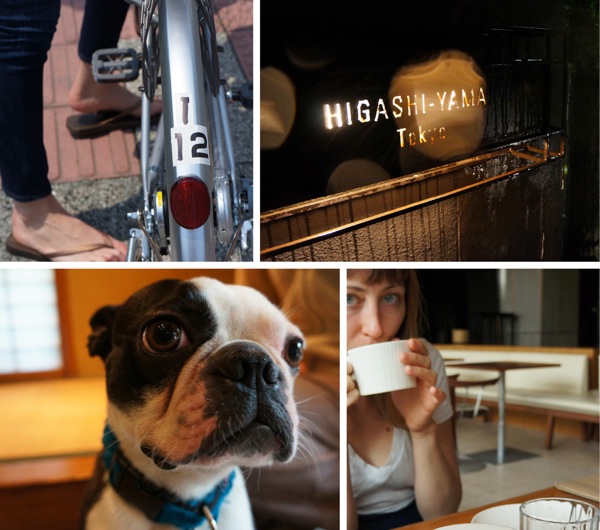
Every day we walked the city until our feet hurt. At night, I would wake up at about 4am from the jet lag, my feet still pulsing, hoping a few more hours of sleep would ease them. We took thousands of photos. There was a surprise around nearly every corner — we were afraid to put our cameras away. My travel companions, fellow IDEOers Anthony and Erika, and I (all above) were lucky to have some amazing hosts. In some of my photos you’ll see Mike, a good friend of mine since my first day at IDEO, who is now in our Tokyo office. He wins the “host of the year” award, making sure we saw his favorite places (such as the tiny coffee shop pictured top right and lower left, below), ordered for us in places with no English menus, and even pointed us towards very specific observations, like that that gorgeous reflection of the copper sink in Higashiyama’s bathrooms (below).

I was also excited to spend some time with Azusa, a friend of mine from Pratt (you may remember her joyful work from this post a few years back). Azusa took us one night to get yuzu ramen (noodles flavored with yuzu, a Japanese citrus fruit) and after, we discovered a tiny little bar with only about ten seats. There, a bartender proceeded to make the most thoughtful screwdriver I’ve ever seen. The screwdriver must be the most thoughtless of cocktails, sloshed together in questionable proportions, often in a Solo cup. But this bartender showed me the screwdriver-as-art-form: squeezing the juice by hand, shaking the drink as if he were in slow motion. I don’t think I will ever see a cocktail performed in that way again, totally simple, yet with honor for its simplicity.

Tokyo7x7

We stayed our last few nights at the Claska, technically the only boutique hotel in Tokyo. The Claska is a wonderful, odd place for many reasons. It is a bit out of the way, but it has a gorgeous sixties modern lobby and the most beautiful gift shop, full of perfect, quirky artifacts. But by far my favorite feature of the Claska is the retro dog grooming salon just off the lobby (pictured above). A long window, positioned at eye level just by the lobby bar, peeks into the space, where you can watch dogs get fluffed to the max by a passel of groomers using humorously space-age dryers. I never saw a dog walk out of there that didn’t look like it couldn’t blow away on a light wind.

Sushi

A highlight was a visit to Midori Sushi in Shibuya, where you order from an iPad and the sushi is delivered to your table by toy trains. Toy! Trains! You might think that with such an emphasis on precision and self-control, the Japanese would not show much evidence of their “inner child.” But in fact, the inner child is alive and well in Japan, breaking through in an unabashed embrace of cuteness and play, even in serious situations. The toy train idea is something that seems to have been thought up by an eight year-old. Here in the states it would be discarded as ridiculous, but fortunately the Japanese don’t censor themselves in this way.

Tokyo7x5

On our very last day in Tokyo, Erika and I were wandering around the area near Gakugei-Daigaku station and spotted these beautiful books. Stripped of their jackets, they were selling for pennies apiece, and we spent the better part of an hour looking for ones with interesting illustrations to bring back with us. Inside one were these very simple, beautiful erotic line drawings. (Japan has a long tradition of exuberant erotic art, mostly woodblock prints known as shunga.) Azusa was embarrassed but obliging in translating the chapter headers for us. (Nothing too exciting, or I promise I would’ve written them down to share.)

IMG 3837

Hidari Pocket in Naka Meguro is the tiniest, cutest café I have ever seen. The garlands, the little drawings on the side of the van, the tiny weathered stools, the drawings of flowers in the foam on the mocha — it was just too much. In moments like this, we often found ourselves overcome, aesthetically, with the experiences we were having. It was almost as if the circuits in our brains couldn’t handle all the beauty, harmony, cuteness, and cleverness. By a few days in, we actually coined a name for this: design convulsions. Suffice it to say, when three out of four designers at a table have their cameras pointed at a very ordinary object, you can be pretty sure it’s a collective design convulsion.

IMG 7039

Tokyo7x4

There is a palimpsestic quality to Tokyo that you start to discover, as you adjust to it and it starts to unfold for you. There are layers that smack you in the face with their daring or their sweetness. But underpinning these are tiers of sensation: patterns, textures, and reflections that are seductive in their simplicity. I came back so filled with inspiration, I was nearly vibrating. I’ll share more in the coming days, about some specific things that just took my breath away. In the meantime, have you been to Tokyo? What joys did you see there?

Images: a mix of mine and Erika Lee’s; most of the better ones are Erika’s!

Joy in the news: Small wonders

26 October 2011

26ALTSMALL SPAN articleLarge

Last week I was interviewed for this great piece on the trend towards “tiny sweets” by New York Times writer Julia Moskin. In the article I try to demystify why it is we’re attracted to mini-canolis or Baked by Melissa cupcakes (above) and talk about the “Alice in Wonderland effect,” where big changes in the scale of objects around us, either tiny or huge, make us reconsider our scale in relation to the world in a joyful way.

For more, check out past posts on tiny sweets, giant sweets, and the joy of miniaturization.

NYT: “Small Wonders”
Image: Tony Cenicola/New York Times

The joy of good food, in abundance

11 September 2011

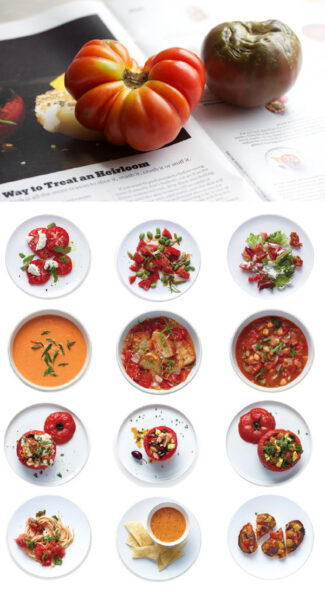
Amidst numerous disappointments for me in the redesign of the New York Times Magazine, there is one thing the new editors got very, very right, this being the presentation of Mark Bittman’s wonderful Eat column. If you’ve been exposed to Bittman through his Minimalist column, or his myriad cookbooks, you know that he stands for beautifully real food, simply prepared. He is a voice for restoring the place of cooking among the palette of basic skills possessed by all adults, and his adroitness at balancing elegance with ease in his recipes makes his body of work an important entry point for those “too busy to cook.” His philosophy of approximate measures, devotion to high quality ingredients, and embrace of the seasonal and sustainable have inspired me on more than one occasion, and so it’s a joy to see his recipes matched by visuals convey their exuberance.

Bittman’s organizing principle is theme and variation. The theme is of the moment: heirloom tomatoes, asparagus, pasta primavera, lobster. It is a carpe diem call, an urging to revel in an evanescent largess of some kind. It is rooted in abundance, a perennial theme of Aesthetics of Joy, and this is what we see brought to the forefront in the visuals. The theme unfolds in variations, typically four movements, that burst with color and possibility. It has become a weekend ritual for me to eagerly anticipate the column, tearing through the magazine to find this page, and add it to the collection on my fridge door. (It’s worth noting that it is nearly as lovely in the online version – in some ways more so, with more emphasis on the food.)

I find these arrays irresistible, and I can’t overstate what a victory I believe this is for real food. In the modern age of mass production, comestible abundance has been claimed by Big Food, by double cheeseburgers and all-you-can-eat buffets, by the Big Gulp and the Venti latte. Aesthetics of abundance are especially prominent in confectionary. It’s the “taste the rainbow” of Skittles, which overflow their boundaries in the ads, an industrial bumper crop. It’s the giddy experience Willy Wonka, vivid M&Ms, everlasting gobstobbers, and Mr. Softee with hundreds and thousands. The association between sugar and joy and abundance is primal – it derives from harvests, and our genetic predisposition to take advantage of excess while we have access to it. Waste not, want not.

But the ecstatic sugar-high has overshadowed the natural abundance available from real food, the kind that comes from a farm, not a factory. It excites me to see an aesthetic treatment that imbues real food with this feeling of plenty. After all, we eat with our eyes as much as our mouths, and for all our best intentions, there is an unconscious craving for muchness.

If there is thing I hope people take away from this blog, it’s that things are easier to change than people. And changing things often leads to changes in people. It may seem trivial, but I see the Eat column as an example of design used to outsmart our cravings, to realign our desires with the needs of our bodies in a contemporary context. I hope this is just the beginning of Aesthetics of Joy in the food revolution.

Now go make yourself some corn and blueberry crisp and savor these last days of summer!

Images: Heirloom tomatoes Yunhee Kim for The New York Times. Food stylist: Maggie Ruggiero. Prop stylist: Deborah Williams. Layout from Margaret & Joy’s gorgeous food blog. Asparagus Yunhee Kim for The New York Times. Food stylist: Maggie Ruggiero. Prop stylist: Deborah Williams. Fruit desserts Yunhee Kim for The New York Times. Food stylist: Megan Schlow. Prop stylist: Deborah Williams.

Gourmet + the joy of food

6 October 2009

gourmet

Oh, how I loved Gourmet. By far my favorite of the foodie mags, it’s always been a voice for the joy of food. Gourmet celebrated not just food’s flavor and aroma, but food as a visual art, food as a universal language, food as a carrier of cultural meaning and dialogue, food as biography of a food-lover’s life. It facilitated this passion for the short on time or skills to some degree, but never compromised the indulgent joy of a day arranged around cooking and eating by bludgeoning it with excessive pragmatism (ahem, Bon Appetit). I would have subscribed at three times the price to have kept it alive.

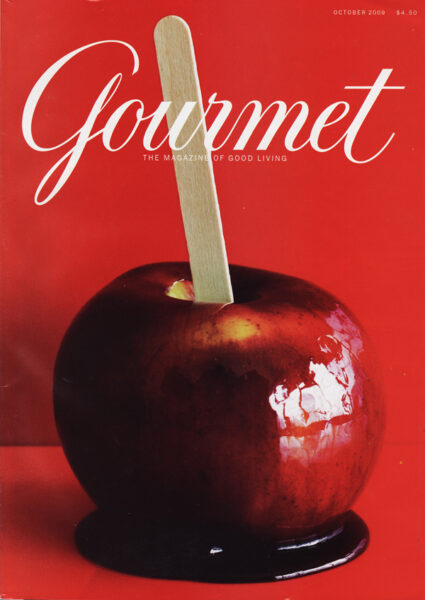
Aesthetics of joy are alive and well on this penultimate cover, so much so I’d already planned a post around it before this sad news arrived. Bright, vibrant color; the spherical apple; the shiny surface; the sticky sweetness you can practically taste just by looking at it — this is the joy of autumn made visible, and a clear illustration of what food culture is losing in Gourmet.

Joyful lunching

14 September 2009

bentos

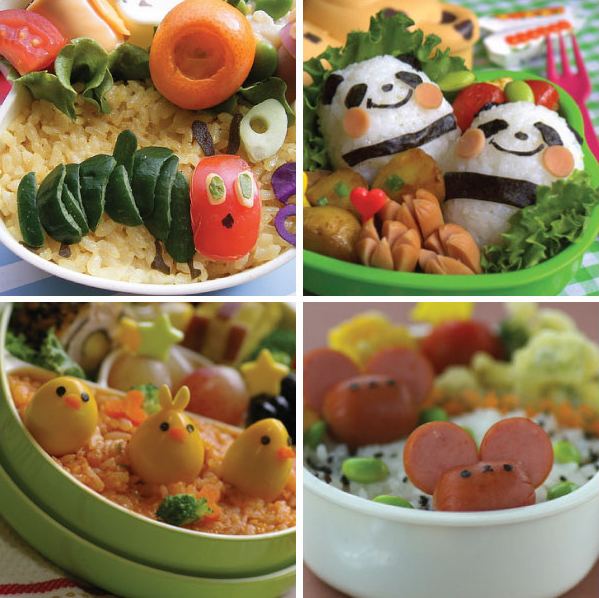
The NYT had a cute piece on bento boxes in this week’s Dining section. Kyaraben, the making of cute lunch boxes for children, rises to the level of art form in Japan. I found these on the Flickr photostream of a mom who makes these weekly for her kids. I think the hungry caterpillar one is irresistible, and the pandas had me at hello. A great example of aesthetics of joy applied to food. I’d be willing to bet that the food in those boxes tastes better than it would if it were just thrown in there too.

NYT: Bento Boxes Win Lunch Fans

Big sweet tooth

11 September 2009

giant_sweets1

Yesterday I posted on miniature sweets and the perspective shift that comes from out-scaled items. On the opposite extreme, giant sweets seem to captivate artists and designers the world over. And because their enormity makes them impossible to overlook, the giant objects seem to have an even stronger Alice-in-Wonderland effect.

Claes Oldenburg and Coosje van Bruggen’s Dropped Cone makes me feel like a Lilliputian living in a land where if I’m lucky, I might catch a dripping from a giant toddler’s melting ice cream. Martha Friedman’s Waffle (currently on view here in Brooklyn) and street artist Celso’s Apples have the similar effect of making me reconsider my own scale and the scale of all the common objects around me.

Of course, scale shifts can go both ways. Oversized objects can have the effect of making us feel ill at ease with our place in the universe and out of control of the events that shape our lives. Oldenburg and van Bruggen’s Knife Slicing Through Wall sculpture highlights this darker side of scale shifting. But sweets are inherently joyful — the sugar, the color, the aroma of baking, the ritual of eating — so giant treats create a much more pleasurable transformation of perspective: magical, childlike, and fun.

Brooklyn designer and studiomate of mine Azusa Hirota brings this whimsical quality to functional objects, allowing interaction with these giant sweets, instead of just viewing. Her chair, a giant cupcake, puts the user in between the cake and icing, so that you’re literally surrounded by the experience. Everyone I’ve seen sitting in it seems to have a big smile on their face. Her giant doughnut, designed in collaboration with Tawny Hixson, transforms a common inner tube into an object of delight. I remember my days spent tubing down the Nam Song river in Vang Vieng, Laos, and it strikes me that it would have been such a wonderful thing to see fellow travelers drifting gently downstream on giant Krispy Kremes!

giant_sweets2

See more of Azusa’s work here. Thank you Maggie, for the waffle tip that inspired the idea for this whole post!

Did I miss any wonderful giant sweets out there? Let me know.

Little sweet tooth

10 September 2009

tiny-sweets

I’m glad Stéphanie Kilgast mentions that these delicious-looking treats are 1:12 scale on her Flickr page, because otherwise I would be calling to ask how she could FedEx over some of those macaroons from Paris. Unfortunately you can’t eat these tiny cakes, but you can buy them on her Etsy page, or gaze admiringly at the many others on her photostream.

I’ve written about miniaturization before on the site, and why we seem to love tiny things. It’s a phenomenon I trace back to childhood and the downscaling of all the elements of real life into toys. As adults, tiny things give us an Alice-in-Wonderland kind of perspective shift. They make us aware of our scale, and allow us to see things in a new way. (They’re also just pretty darn cute.)

Thanks to Lisa at My Artful Life for the tip!

Joyful weekend: schmancy ice cream carts

4 September 2009

icecream

My best friend is in town from London this weekend, and we have a whole day to ourselves and a whole city to explore. I’m pretty sure ice cream will be on the agenda.

I’ve known Annie longer than I’ve known ice cream, even. We’ve been best friends since we met in nursery school, at the age of two. Once we got driver’s licenses we would regularly bounce between Ben & Jerry’s and Friendly’s, thanking our metabolisms all the way. At Friendly’s we had standard orders: a peanut butter cup sundae for me, a mint chip sundae with butterscotch sauce and gummy bears for Anne. (Which I still think is gross.) Last time she came to town we had a wild goose chase across Manhattan looking for a mythical Friendly’s (save yourself some time, Manhattanites — there isn’t one). It’s one thing we can count on in our ever-changing lives; we will both always be up for a cone, anytime, anywhere.

So this NYT review of the city’s gourmet ice cream carts is perfectly timed. I think 87 flavors is a bit excessive even for us, so it’s nice to be able to cut to the chase. I’d say that Cookshop’s strawberry would go perfectly with a visit to the High Line…

Happy long weekend — enjoy the last taste of summer!

NYT: 87 Scoops Later, A Sweet Meltdown

Fat and happy

16 July 2009

10aging_600

Roger Cohen has a wonderful op-ed piece in today’s New York Times about the recently published study showing that rhesus monkeys fed a restricted calorie diet (30% below normal intake) live longer than those who eat what they please. He views the study as an opportunity to pose the question, “What’s life for?” Is it for enjoying, with life-shortening indulgences like chocolate and cheese peppered throughout? Or is it for something else, in which case the longer the better, whatever the cost?

Cohen points to this photograph of monkeys Canto and Owen to suggest his answer:

Which brings me to low-cal Canto and high-cal Owen: Canto looks drawn, weary, ashen and miserable in his thinness, mouth slightly agape, features pinched, eyes blank, his expression screaming, “Please, no, not another plateful of seeds!”

Well-fed Owen, by contrast, is a happy camper with a wry smile, every inch the laid-back simian, plump, eyes twinkling, full mouth relaxed, skin glowing, exuding wisdom as if he’s just read Kierkegaard and concluded that “Life must be lived forward, but can only be understood backward.”

Is this a living example of aesthetics of joy? It occurs to me that enjoyment has its own aesthetic, that its not just the things enjoyed but the results of enjoyment that are aesthetic. Owen communicates joy (as much as a caged primate can, at least) in his roundness, his expression, his glossy wellbeing — the products of accumulated moments of joy in his life. Canto evinces an aesthetic of deprivation, and like parched land, hunger strikers, and disappointed children, deprivation evokes a primal aversion, decidedly not joyful. So is there something to this idea of fat and happy?

NYT: “The Meaning of Life”