7 Ways to Create a Productive Workspace, According to Psychology and Neuroscience
Quick announcement: Our once-a-year home design workshop is coming soon! Discover 5 secrets to transform your current space into one you truly love. Join the waitlist
You’re staring at your screen, rereading the same paragraph for the third time. Your brain feels foggy. You assume you need more coffee, better sleep, or just more willpower. But what if the problem isn’t you? What if it’s the fluorescent lights, the windowless walls, or the low ceiling overhead?
Recently, The New York Times included Joyful in a roundup of books about productivity, noting that creating the conditions for productivity might be as important as your task list or time-management apps. In researching Joyful, I discovered that our spaces don’t just make us feel good. They can influence our thinking in many different ways, often without our conscious awareness. The subtle sensations we pick up through our senses can shape our productivity, performance, and creativity in profound ways.
7 Ways to Create a Productive Workspace, According to Psychology and Neuroscience
Traditional office design is really based on a mechanistic idea of human productivity. We’re treated essentially as machines that crank out a certain number of widgets in a certain amount of time, so the goal becomes minimal distraction and maximum efficiency—no need to take the body or the senses into account at all. But we now recognize that the mind and body are deeply connected, and we can’t ignore the body when we talk about productivity. When the full spectrum of our needs is taken into account, we’re more energetic, more alert, and more focused.
We’re not robots. Human attention and our ability to produce are related to a range of factors including our mood, our energy levels, our surroundings, whether we feel safe and comfortable, whether we have the right level of stimulation. When we manage these factors poorly, we struggle through our work, procrastinating and getting drawn into every little distraction. When we manage them well, we sometimes find that we can achieve as much in a few focused hours as we normally would in days.
Decision fatigue is a well-documented example of the way our attention fluctuates. Numerous studies show that human willpower and our ability to focus on a task decline after a certain amount of time. Judges, for example, show dramatic patterns in their rulings throughout the day—the percentage of favorable parole decisions drops gradually from about 65% to nearly zero within each decision session, returning abruptly to 65% after a food break (Danziger, Levav, & Avnaim-Pesso, 2011). Surgeons also show decreased performance based on fatigue levels, with medical errors and adverse events increasing significantly during afternoon hours (Feihl et al., 2019).
Our environment can offer a valuable corrective, help to restore our ability to focus and increase our overall productivity—while making the workday more enjoyable in the process. In this post, I’m sharing seven specific ways you can set up your environment to improve your thinking for the better, backed by science.
to increase productivity, Add Art and Plants
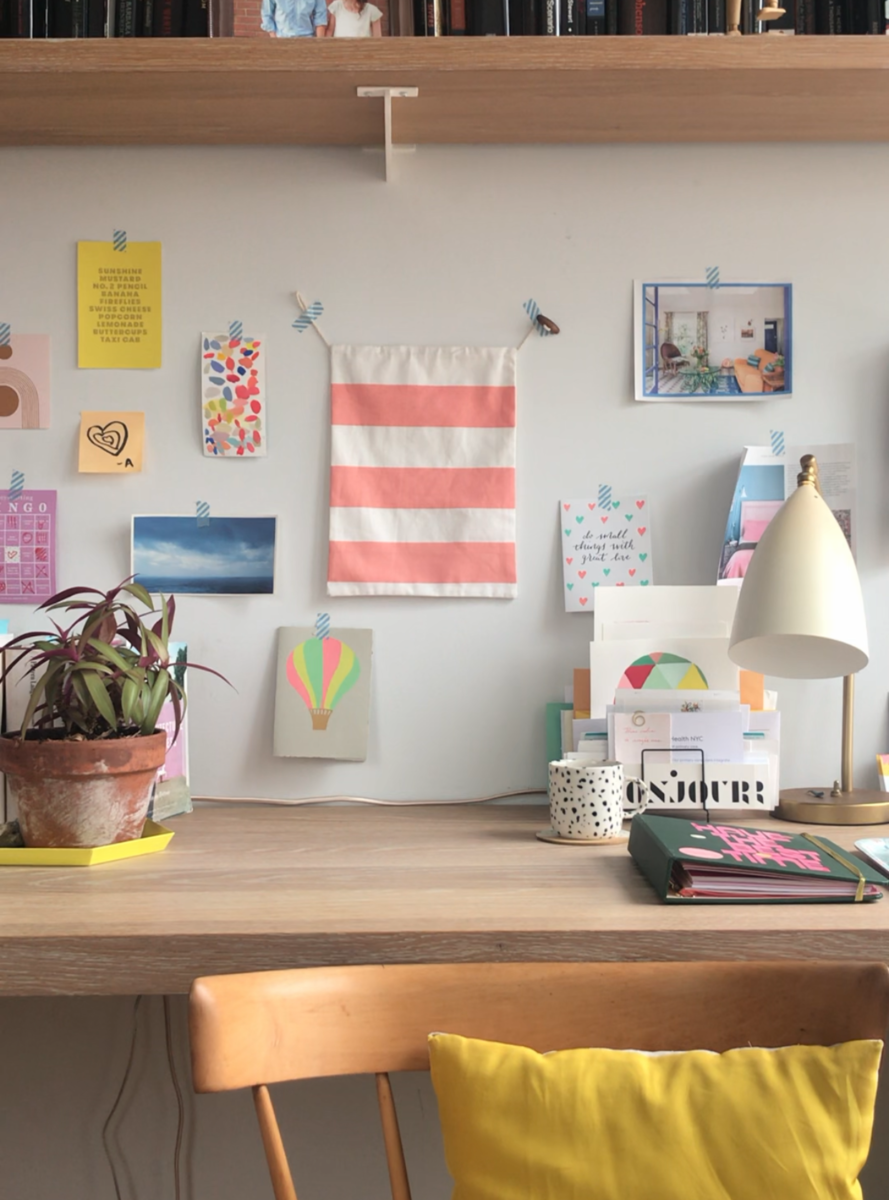
If you want to be more productive, the simplest change you can make is to include art and plants in your environment. A team of organizational psychologists from the University of Exeter conducted a fascinating study comparing what they called “lean” work environments (standard cubicles with nothing extra) to “enriched” work environments (cubicles with art and plants) (Knight & Haslam, 2010). People working in enriched environments were 15% more productive than those in lean environments.
The bare cubicle is designed to minimize distractions, but it misses the mark because for human beings, too little stimulation is actually agitating. The monotony of stripped-down environments is unsettling because in a natural environment, there is always an array of textures, sounds, and scents. Some passive visual stimulation is essential for our ability to focus.
Here’s where it gets really interesting: when people in the lean vs. enriched work environments study were given control over where to put the plants and art they chose for their space, they were 32% more productive than people in lean environments. There’s an element here of agency. When you feel a sense of control over your environment, it creates a sense of safety and ease that allows you to do your best work.
Use Green to Boost Creativity
While there are conflicting data on the role of specific colors on work performance, green is one color that seems to have a remarkably consistent effect. Researchers found that people who saw a brief glimpse of green before completing a creativity task performed significantly better than those who saw white, gray, red, or blue (Lichtenfeld, Elliot, Maier, & Pekrun, 2012). In four separate experiments, participants exposed to green—whether as a colored rectangle or as a background on a screen—demonstrated more flexible and inventive thinking.
Research believes this effect may have an evolutionary relationship to our natural habitat, where green is a signal of lushness, security, and safety. This association may be what puts us in a mindset where we’re more open and flexible in our thinking, which allows us to be more creative.
Go Up in Space to Think Big Picture
If you need to zoom out and see the forest for the trees, try getting an elevated perspective. This is because we have an unconscious association between what’s called conceptual scope and height. When we move up in space, we feel like we’re taking a bird’s-eye view, and this actually changes how we think.
Researchers asked study participants to interpret a set of everyday tasks based on descriptions. They found that when people imagined being in an office on a higher floor of a building, or when they sat on elevated stools versus low stools, they were significantly more likely to describe actions in abstract, big picture ways (Aggarwal & Zhao, 2015). For example, a description of someone locking a door would be interpreted as “securing the house” (abstract, big-picture thinking) rather than as “putting a key in the lock” (concrete, detail-oriented thinking). In another experiment from the same study, when people viewed photographs taken from a high angle (as if looking down from above), they scored higher on measures of abstract thinking compared to those who viewed the same objects photographed from a low angle.
So if you want to think strategically, try moving to a higher location. If you have a two-story office, locate your strategy meetings on the upper floor. Use high stools rather than low seating, or make sure that room has an elevated view at a window. And if all else fails, use aerial views—photographs of landscapes from above can also bring on this way of thinking.
Get a Walking Pad to Catch More Mistakes
One of the most surprising findings I’ve come across in my research found that being in motion can actually help you catch more mistakes. In a study where radiologists reinterpreted CT scans they had previously examined while seated, but this time while walking at 1 mph on a treadmill, their detection rates for clinically important findings improved dramatically—from an average of 85% while seated to 99% while walking (Kuhlman, Stroud, & Wilson, 2008).
Why is walking such a powerful cognitive enhancer? One possibility may go back to our hunter-gatherer origins: we’re wired to be scanning the environment while engaged in physical challenges. When we’re moving around, our perceptual system is on alert. So if you’re doing work that requires careful attention to detail, such as proofreading, reviewing data, or catching errors, consider getting a walking pad or treadmill desk, or at least stand up and move around periodically while you work. (I have this one, and it’s been a great addition to my home office.)
Sit by a Window to Improve Focus
This one is particularly important for anyone who struggles with concentration. Research on attention restoration theory shows that exposure to nature allows us to recover from mental fatigue and overstimulation (Kaplan, 1995). For children with ADHD, being in a green space is more supportive of their ability to focus than other settings, and the benefits extend to all of us (Taylor & Kuo, 2009).
Elements of nature—like trees, plants, flowing water, or clouds—draw on a different kind of attention that’s more gently engaging. They hold your attention softly without depleting your cognitive resources. And here’s the good news: you don’t even have to go outside. High school students with green views outside their classroom windows performed significantly better on tests requiring focused attention and recovered more effectively from stress compared to students with views of built environments (Li & Sullivan, 2016). Position your desk near a window with a view of greenery, and you’ll find it easier to sustain attention on demanding tasks.
Lower Your Ceiling for Detail Work
If you’re doing detail-oriented work that requires precision—coding, data analysis, editing—consider working in a space with a lower ceiling. Studies on classroom design found that participants in rooms with lower ceilings achieved higher scores on tests requiring focused attention and logical thinking, with test performance improving by 20% in low-ceilinged spaces (Wu, Chen, He, & Lu, 2024).
Lower ceilings constrain our thinking in a helpful way for detail work. While 10-foot ceilings promote relational and abstract thinking, 8-foot ceilings encourage more concrete, focused processing (Meyers-Levy & Zhu, 2007). So when you need to zero in on specifics and catch small errors, a lower ceiling helps your mind zoom in rather than zoom out.
Use Rosemary Scent to Enhance Working Memory
This one might sound unusual, but there’s science behind it: the aroma of rosemary essential oil can significantly enhance working memory performance. In a study with healthy adults, exposure to rosemary aroma during cognitive testing led to significant enhancements in overall quality of memory and secondary memory, and also impacted mood, with measurable changes in EEG brain wave patterns (Moss, Cook, Wesnes, & Duckett, 2003). The mechanism isn’t fully understood, but aromatic compounds may influence neurotransmitter systems involved in memory and attention.
Peppermint aroma has also been shown to enhance vigilance and sustained attention in visual tasks (Warm, Dember, & Parasuraman, 1991). If you’re doing memory-intensive work, such as studying, learning new material, or tasks requiring you to hold multiple pieces of information in mind, consider diffusing rosemary or peppermint essential oil in your workspace.
—
Recently, I redesigned my own workspace to take advantage of this research. I switched to a standing desk with a walkpad to help me think more big picture and allow for more movement and postural variety throughout the day. I also added pops of green to the artwork above my desk to spur creativity. And I take daily walks outside to help restore my attention. All together, I’ve found that these changes have made a massive difference in my focus and energy throughout the day.
Which strategy are you going to try first? Let me know in the comments!
—
Ready to fall in love with your home?Join the waitlist for our upcoming free home workshop. You’ll learn 5 designer secrets that have helped thousands transform their spaces without renovating or breaking the bank. (We only do this once a year!)




Discussion (3 Comments)
I’m definitely going to try that movement to catch more mistakes tip!
I am definitely going to try rosemary and maybe my green wall is a win after all : )
Love these ideas. Great for home office with no neighbors, but in a typical shared corporate office, some of these ideas come with maintenance, health, and safety challenges. Be kind to your local workplace/facilities teams!